
How to Know If He Truly Loves You
When His Words Give You Hope but His Actions Leave You Confused
If you have been searching for how to know if he truly loves you, there is a good chance you are not looking for a simple list of signs.
You are trying to understand a contradiction.
He says he loves you.
Sometimes you believe him completely.
You hear it in his voice.
You feel it in the way he looks at you.
You notice how quickly he reaches for you when life becomes difficult.
There may be moments when the connection feels so natural that questioning it seems almost impossible.
Then something changes.
He becomes distant.
A conversation you thought would bring clarity ends with another delay.
Plans remain vague.
Promises that once felt close begin moving further into the future.
You are left trying to understand how someone can express so much feeling while creating so little certainty.
That is where the real question begins.
Not simply:
“Does he love me?”
But:
“What kind of love is this?”
Is it the kind of love that slowly becomes more honest, dependable, and visible?
Or is it a feeling that becomes strongest when he is afraid of losing you, lonely, overwhelmed, or in need of comfort?
Does he love you as a person with your own needs, fears, and future?
Or does he love the way you make him feel when his own life becomes difficult?
Those questions are painful because love rarely arrives with proof.
You cannot place it on a table and examine it.
You cannot measure it by how often someone says the words.
You cannot always identify it by chemistry, affection, jealousy, or longing.
A person may miss you deeply.
They may think about you constantly.
They may feel protective of you.
They may even become frightened by the possibility of losing you.
Yet none of those feelings automatically tells you what they are prepared to build with you.
That uncertainty can become emotionally exhausting.
One day, you remember everything he has said and feel certain that the love between you is real.
The next day, you look at what has not changed and wonder whether you have been holding onto words because the actions were never clear enough.
You may find yourself moving between hope and doubt several times in a single week.
Perhaps even several times in one day.
A warm message can reassure you.
A period of silence can undo that reassurance.
A promise about the future can help you breathe again.
Another postponed decision can leave you questioning the entire relationship.
It can feel as though your heart is constantly being asked to choose between what he says and what you see.
That is not an easy place to live.
The Moments That Make You Believe Him
Perhaps he remembers details other people forget.
He notices when something is wrong, even when you try to hide it.
He tells you things he says he cannot share with anyone else.
When you are together, he may seem calmer, warmer, or more like himself.
There are conversations that feel too honest to be fake.
Moments of tenderness that do not feel rehearsed.
Silences that feel comfortable rather than empty.
You may have seen him become emotional in ways he rarely allows others to see.
Perhaps he has told you that meeting you changed something inside him.
That you made him feel alive again.
That you understand him more deeply than the people who have known him for years.
Those moments matter to you because they feel private and real.
They are not simply words on a screen.
They are experiences you have lived.
That is why it can feel insulting when someone dismisses the entire relationship with one sentence.
“He does not love you.”
How could they know?
They were not there.
They did not see his expression.
They did not hear the conversations.
They do not know the history between you.
Their judgment may be based on what his life looks like from the outside.
Your belief is based on what you have experienced with him personally.
That difference can make you feel deeply misunderstood.
The Moments That Make You Question Everything
Then there are the other moments.
The ones you may not talk about as often.
The time he disappeared emotionally after telling you how much you meant to him.
The plans that were discussed with certainty but never became real.
The conversations about the future that always seemed to end with:
“I just need more time.”
Perhaps he becomes affectionate whenever he senses you pulling away.
He says exactly what your heart has been longing to hear.
For a while, everything feels close again.
Then, once he feels secure that you are still there, the urgency fades.
You are left wondering whether the love was genuine or whether he simply could not bear the thought of losing access to you.
That question can feel cruel.
You may hate yourself for asking it.
You may immediately remember every kind thing he has done and feel guilty for doubting him.
But the question returns because something remains unresolved.
If his love is real, why do you still feel so uncertain?
If you matter so much, why does your place in his life still feel fragile?
If he sees a future with you, why does that future remain mostly inside conversations?
These questions are not created by a lack of love on your part.
They are created by the gap between emotional closeness and practical certainty.
And the wider that gap becomes, the harder it is to ignore.I Feel Understood
Perhaps you have never said the deepest version of this question aloud.
You may ask friends:
“Do you think he cares about me?”
But what you really want to ask is:
“Have I misunderstood everything?”
You may say:
“He is just going through a difficult time.”
But inside, you are wondering:
“How long can a difficult time last before it becomes the relationship itself?”
You may tell yourself that his circumstances are complicated.
That he has responsibilities.
That he cannot make decisions as quickly as someone who is completely free.
You understand that lives do not change overnight.
Perhaps you have understood it so well that you have become the person who explains his behavior to everyone, including yourself.
You defend his silence.
You explain his delays.
You protect the meaning of his promises.
You remind yourself of the pressure he is under.
And maybe those explanations are true.
The problem is that even a true explanation does not always remove the pain it causes.
You can understand why he is afraid and still feel hurt by his hesitation.
You can respect his responsibilities and still wonder where your needs fit into his life.
You can believe that his feelings are real and still question whether those feelings are enough to create the relationship you hope for.
Both realities can exist together.
That is what makes this question so difficult.
When You Begin Doubting Your Own Judgment
After living with uncertainty for long enough, many people stop questioning only the relationship.
They begin questioning themselves.
Perhaps you wonder whether you are too sensitive.
Too impatient.
Too emotional.
You may tell yourself that a more understanding woman would not need so much reassurance.
That if you were stronger, you would not feel so affected by his inconsistency.
Sometimes you blame yourself for asking questions that seem to make him uncomfortable.
You may even apologise for needing clarity.
Then, during quieter moments, another thought appears.
Why should wanting honesty make me feel guilty?
Why should needing consistency make me feel demanding?
Why does asking where I stand feel like placing pressure on him?
Those thoughts can pull you in opposite directions.
Part of you wants to protect the relationship.
Another part wants to protect yourself.
You may have become so accustomed to understanding his position that you are no longer sure whether anyone is fully understanding yours.
That can become one of the loneliest parts of loving someone whose life is divided.
You are expected to be patient with his fears.
Patient with his responsibilities.
Patient with his timing.
Patient with everything that makes his situation complicated.
Yet your own emotional exhaustion may remain largely invisible.
You carry it quietly because you do not want to become another source of pressure in his life.
When You Compare Yourself to the Woman He Has Not Left
If another woman is part of the situation, comparison can become almost impossible to avoid.
You may ask yourself what she has that you do not.
History?
A family?
Social acceptance?
Financial ties?
A version of him that existed before you arrived?
Perhaps you know he complains about the relationship.
He may tell you that the emotional connection disappeared years ago.
Still, he remains there.
That can make the comparison feel deeply personal.
You may begin treating his decision to stay as proof that she is more important.
More valuable.
More difficult to lose.
Even when he insists that is not what his staying means.
The mind searches for a clear explanation.
If he loves you but remains with her, perhaps part of you concludes that his love for you must be smaller.
That conclusion may not reflect the full truth.
But emotionally, it can feel impossible to escape.
You are not only comparing two women.
You are comparing the relationship you experience privately with the life he continues choosing publicly.
Those are not equal conditions.
One relationship may exist in emotionally intense moments.
The other may be woven into homes, children, routines, finances, family traditions, and years of shared identity.
Yet your heart may still reduce the entire situation to one painful question:
“If I were enough, would he not have chosen me by now?”
That question can slowly damage the way you see yourself.
Not because you lack confidence.
Because uncertainty has made another person’s decision feel like a judgment of your worth.
The Fear That You May Be Convenient Rather Than Chosen
Perhaps the question you fear most is not whether he feels something.
You already believe he does.
The deeper fear is that his feelings may never become more than comfort.
You may be the person he turns to when he feels lonely.
The person who understands him when his marriage feels cold.
The person who helps him feel wanted, admired, or emotionally alive.
That connection may be genuine.
Still, you may wonder whether he loves you for who you are or for the relief you provide.
Would he continue choosing you if his life became easier?
Would he still reach for you if he were no longer unhappy?
Does he want a future with you, or does he need somewhere to escape from the present?
These are not cynical questions.
They are human questions.
There is a difference between being emotionally important and being genuinely prioritised.
A person can depend on you deeply without being prepared to build a life with you.
They can need your comfort without accepting responsibility for what the relationship is doing to your heart.
They can fear losing you while still refusing to change the circumstances that keep you uncertain.
That is why the words “I love you” may no longer feel like enough.
Not because you have stopped believing them.
Because you are trying to understand what those words actually mean in the life you share.
When Love Begins to Feel Like Waiting
At the beginning, waiting may have felt temporary.
A difficult season.
A situation that needed time.
A few responsibilities that had to be resolved before the relationship could move forward.
You were patient because you believed patience was part of loving him.
Then the timeline changed.
One conversation became another.
One delay led to a new reason.
The future remained possible, but never fully present.
Eventually, waiting stopped feeling like something you were doing for the relationship.
It started feeling like the relationship itself.
You waited for messages.
For meetings.
For clarity.
For decisions.
For the day he would finally be free to love you without limitations.
That kind of waiting changes people.
You begin measuring happiness in small moments.
One afternoon together feels enormous because you do not know when the next one will come.
A loving message carries more emotional weight because so much of the relationship depends on reassurance.
You learn to survive on pieces of certainty because complete certainty never arrives.
Over time, you may become afraid to ask for more.
What if wanting more makes him pull away?
What if you lose the relationship by asking it to become real?
So you accept less clarity than you truly need, hoping that your patience will eventually prove how deeply you love him.
The Question You Are Really Afraid to Ask
Perhaps the real question is not:
“Does he truly love me?”
Perhaps it is:
“What if he loves me, but not in the way I need to be loved?”
That possibility can be more painful than believing he feels nothing.
If he did not care, the answer would be clearer.
You could grieve the relationship for what it was.
But if his love is real while his actions remain uncertain, your heart is left trying to decide whether love alone is enough.
You may fear that questioning the relationship means denying everything beautiful that has happened between you.
It does not.
You may worry that looking honestly at his behavior means accusing him of lying.
It does not.
You can believe that someone’s feelings are sincere and still feel wounded by the life those feelings have created.
You can recognise love and still question whether it is dependable.
You can value the connection while admitting that uncertainty has changed you.
None of those truths cancel the others.
They simply reveal how complicated love becomes when it exists without clarity.
You Are Not Foolish for Wanting His Love to Be Real
Before we go any further, I want you to hear this clearly.
You are not foolish for believing him.
You are not weak because the relationship matters to you.
You are not desperate because you want reassurance.
You are not unreasonable for wondering whether his actions support his words.
People often judge complicated relationships from a distance.
They see the circumstances and think the answer should be obvious.
They do not feel what you feel.
They do not know the conversations that built your hope.
They have not experienced the tenderness, the honesty, the chemistry, or the moments that made the connection feel undeniable.
That does not mean every hope will become reality.
It means your feelings did not appear from nowhere.
There was something that made you believe.
Something that made you stay.
Something that made you imagine a future.
That deserves to be understood before anyone tells you what it means.
A Quiet Thought Before We Continue
Sometimes people ask whether a man truly loves them because they want reassurance.
More often, they ask because reassurance has stopped lasting.
The words still bring comfort.
But the comfort disappears more quickly than it used to.
The heart begins asking for something deeper than another promise.
It wants to understand whether the relationship is built on love, attraction, attachment, comfort, dependence, or genuine commitment.
Those experiences can feel similar.
They are not the same.
Before looking at the signs of real love, we first need to understand why those differences can be so difficult to recognise when your own heart is involved.
That is where the next stage begins.
Why It Can Be So Difficult to Recognize Real Love
Real love is not always easy to recognize, especially when the relationship itself is complicated.
In simple relationships, love has room to show itself openly.
Two people can make plans.
Spend ordinary time together.
Meet each other’s friends.
Build routines.
Disagree, repair, and continue learning one another.
Love has space to move beyond emotion and become part of everyday life.
But when a relationship is hidden, limited, interrupted, or shaped by another commitment, love can be much harder to understand.
You may feel something intense and sincere.
He may express feelings that seem impossible to fake.
Yet the relationship may still lack the ordinary experiences that help people understand what those feelings truly mean.
That creates a difficult emotional situation.
You are trying to measure love inside circumstances that make love harder to measure.
A private relationship can feel incredibly deep because it contains emotional intensity, longing, secrecy, and anticipation.
At the same time, it may not yet contain enough shared reality to show whether the connection can survive responsibility, routine, disappointment, and change.
That does not mean the love is false.
It means the environment around the relationship may make certain emotions appear larger, clearer, or more permanent than they actually are.
When your heart is involved, separating genuine love from intensity, relief, attachment, hope, or emotional dependence becomes extremely difficult.
When Intense Feelings Look Like Love
Intensity can feel almost identical to love.
Sometimes it feels even stronger.
You think about him when you wake up.
Small changes in his tone affect your entire mood.
A message from him can bring immediate relief.
A day of silence can create anxiety, doubt, and fear.
When you are together, everything else may seem to disappear.
That emotional force can make the relationship feel unquestionably real.
And the feelings may be real.
The difficulty is that powerful emotion does not always tell you what kind of connection you are experiencing.
Intensity often grows where there is uncertainty.
When access to someone is limited, every interaction carries more weight.
A short meeting may feel more meaningful because you do not know when the next one will happen.
A loving message may feel more powerful because you have spent hours or days waiting for reassurance.
A promise about the future may create an enormous emotional response because so much of your hope depends on it becoming true.
The relationship begins operating through emotional highs and lows.
During the highs, you feel deeply loved.
During the lows, you question whether the love exists at all.
That cycle can create stronger feelings than a calm, stable relationship.
Not because the connection is necessarily deeper.
Because uncertainty keeps your emotions alert.
You are always waiting for the next sign.
The next conversation.
The next moment that confirms you still matter.
Over time, your heart can begin treating relief as proof of love.
When he finally calls after pulling away, the relief may feel like closeness.
When he becomes affectionate after sensing that you are upset, the renewed warmth may feel like devotion.
When he promises change after you begin questioning the relationship, hope may return so quickly that the earlier pain becomes easier to overlook.
This does not mean he is intentionally manipulating you.
Sometimes people respond to distance because they are genuinely afraid of losing someone.
Sometimes they become more expressive when the relationship feels threatened because the possibility of loss makes their feelings more visible.
However, fear of losing you and readiness to build a stable future with you are not automatically the same thing.
A person may feel intensely attached to you.
They may miss you deeply.
They may become distressed when you pull away.
Still, those emotions do not necessarily reveal whether they are prepared to create consistency, clarity, and commitment.
Real love can be intense.
But intensity alone cannot prove real love.
The deeper question is whether the feelings become steadier over time.
Do they create greater trust?
Greater honesty?
Greater responsibility?
Or does the relationship continue depending on emotional urgency, repeated reassurance, and the fear of losing one another?
Love should not be measured only by how strongly someone reacts when you are leaving.
It should also be visible in how they care for the relationship when they believe you are staying.
Why Secrecy Can Make a Relationship Feel More Powerful
Secrecy changes the emotional atmosphere of a relationship.
When only the two of you understand what exists between you, the connection can begin to feel like a private world.
A place protected from outside judgment.
A place where you can say things you cannot say anywhere else.
That privacy may create genuine emotional intimacy.
You may share fears, dreams, disappointments, and personal truths that neither of you feels comfortable discussing with other people.
Because the relationship exists away from ordinary life, every conversation can feel more focused.
There are fewer distractions.
Less routine.
Less responsibility inside the moments you share.
For a while, it may feel as though the two of you understand each other in a way no one else ever has.
That feeling can be incredibly powerful.
Yet secrecy also changes what the relationship is asked to prove.
A private connection may not face the same pressures as a visible relationship.
It may not have to manage household responsibilities, financial stress, parenting disagreements, family expectations, exhaustion, or the ordinary irritation that comes from sharing daily life.
Instead, much of the relationship may take place during emotionally meaningful moments.
Phone calls after difficult days.
Messages late at night.
Private meetings filled with affection and relief.
Conversations about the life you wish you had.
Those moments are not imaginary.
But they may show only part of who both people are.
Secrecy can also make the relationship feel more precious because it is protected from the outside world.
You may begin thinking:
“No one else understands what we have.”
That may be true.
It may also make it harder to question the relationship.
Any concern raised by someone outside the connection can feel like judgment from a person who does not understand the emotional truth between you.
As a result, you may become more protective of the relationship.
More determined to defend its meaning.
More willing to tolerate uncertainty because the bond feels rare.
Secrecy can also create a sense of shared sacrifice.
Both of you may feel that the difficulty of the circumstances proves the strength of the love.
You may believe that because the relationship survives distance, limited time, and outside pressure, it must be extraordinary.
Sometimes it is.
However, suffering does not automatically make a relationship more genuine.
Difficulty can reveal commitment.
It can also make people emotionally invested in proving that the pain has been worth something.
The longer you have waited, hidden, or sacrificed, the harder it may become to consider the possibility that the relationship is not moving where you hoped.
That possibility can feel as though it would erase everything you have endured.
It would not.
The connection may still have been meaningful.
Your feelings may still have been sincere.
But meaning and permanence are not the same.
A relationship can matter deeply and still fail to become the future you imagined.
Secrecy intensifies connection because it creates a world only two people share.
Real love, however, eventually needs to exist beyond that protected world.
It must be able to survive honesty, accountability, ordinary life, and the consequences of being visible.
Until that happens, it can be difficult to know whether the relationship is strong because of who you are together or because the secrecy itself has made every moment feel more important.
When Limited Time Together Creates an Idealized Connection
Limited time can make people appear almost perfect.
When you only see someone during carefully chosen moments, the relationship may contain less of the ordinary friction that reveals who a person is over time.
You may see him when he is emotionally open.
When he has missed you.
When he needs comfort.
When he has made time specifically to be with you.
Those moments often bring out warmth, attentiveness, and affection.
Meanwhile, the more difficult parts of everyday life may exist somewhere else.
His stress.
His irritability.
His habits.
His responsibilities.
The way he behaves when he is tired, disappointed, bored, or under pressure.
You may hear about those parts of his life, but you may not experience them directly.
That can create an idealized connection.
Not because either person is pretending.
Because limited time naturally encourages people to bring their most emotionally available selves into the relationship.
When time is scarce, you do not want to waste it arguing.
You focus on closeness.
You talk about meaningful subjects.
You make the most of every moment.
That can make the relationship feel more emotionally satisfying than the marriage or long term partnership he compares it with.
But the comparison may not be entirely fair.
One relationship carries bills, routines, children, conflict, fatigue, and years of unresolved disappointment.
The other may exist mainly in chosen moments of emotional connection.
The difference in atmosphere can easily feel like proof that one relationship is true love and the other is not.
Sometimes that conclusion may be accurate.
Sometimes it may reflect the different conditions under which each relationship exists.
Idealization also grows when there are gaps between meetings.
During those gaps, the mind fills in the missing space.
You remember his best qualities.
Replay the most meaningful conversations.
Imagine the future.
Build emotional continuity between moments that may be separated by days or weeks.
The relationship continues inside your thoughts even when you are apart.
That can make the bond feel constant, even if the actual shared time is limited.
You may also imagine how different life would be if the two of you were free to be together.
Perhaps you picture ordinary mornings.
Travel.
A shared home.
Holidays without secrecy.
The chance to love each other openly.
Those hopes can become emotionally vivid.
After a while, you may not only be attached to the man you know.
You may also be attached to the future version of the relationship you have imagined.
That future can feel so real that present uncertainty becomes easier to tolerate.
You tell yourself the difficult circumstances are temporary.
The real relationship will begin later.
Once he leaves.
Once the timing improves.
Once the obstacles are gone.
The danger is that “later” can become the place where the relationship appears strongest.
In the future, everything is possible.
There are no missed promises.
No conflicting responsibilities.
No ordinary disappointments.
Only the life you both say you want.
Real love must eventually be understood in the present.
Not only through what might happen one day.
A person’s ability to imagine a future matters.
So does their willingness to create one through consistent choices.
Until those two things begin meeting, it can be difficult to know whether you are building a relationship or emotionally surviving on its potential.
Why Mixed Signals Make You Search for Reassurance
Mixed signals do something powerful to the human mind.
They create a problem that feels as though it must be solved.
When someone is consistently loving, you feel less need to analyze every detail.
When they are consistently distant, the message eventually becomes clearer, even if it hurts.
The deepest confusion often appears when warmth and distance alternate.
He opens his heart.
Then withdraws.
He talks about the future.
Then avoids the conversation.
He tells you that you are important.
Then behaves as though your needs can wait indefinitely.
Each change sends you searching for an explanation.
Perhaps he is afraid.
Perhaps something happened at home.
Maybe he is overwhelmed.
Maybe you asked for too much.
Maybe he needs space.
Maybe the relationship is ending.
Maybe the next conversation will finally fix everything.
The mind keeps working because it wants emotional certainty.
When certainty does not arrive, reassurance becomes extremely valuable.
A message saying “I love you” may calm the fear.
A thoughtful gesture may help you believe again.
A promise may restore hope.
For a while, the questions become quieter.
Then another period of distance begins, and you need reassurance again.
Over time, the relationship can become organized around the search for emotional confirmation.
You start paying attention to small changes.
How quickly he replies.
Whether he uses the same affectionate language.
How often he initiates contact.
Whether his tone feels different.
Whether he seems distracted.
Every detail begins carrying meaning because clear answers remain unavailable.
This can make you feel as though you are overthinking everything.
In reality, your mind is trying to create stability inside an unstable pattern.
Reassurance is not a weakness.
People naturally need emotional safety.
The problem appears when reassurance repeatedly replaces resolution.
He may comfort you each time you become uncertain.
But does anything change afterward?
Do the conversations lead to greater honesty?
Does the relationship become more secure?
Do the promises gradually turn into decisions?
Or does reassurance simply help both of you return to the same arrangement?
A loving response can be sincere and still fail to solve the problem beneath it.
He may genuinely hate seeing you hurt.
He may truly fear losing you.
Still, if the same uncertainty continues returning, the reassurance is treating the emotion without changing the circumstances that keep creating it.
Eventually, you may begin believing that your need for reassurance is the problem.
You tell yourself to stop asking questions.
To become more patient.
To trust him.
Yet the need keeps returning because the relationship has not given you enough stability to stop searching.
Real love does not eliminate every doubt.
No relationship can do that.
But over time, genuine love usually creates a growing sense of emotional safety.
You may still face challenges.
The future may remain complicated.
However, you should gradually feel that his words, actions, and intentions belong to the same story.
When mixed signals remain the permanent language of the relationship, reassurance alone cannot tell you whether the love is real.
It only tells you that the uncertainty is painful.
Sometimes the problem is no longer deciding whether the feelings are genuine. The inconsistency itself starts changing how emotionally attached you become, especially when distance is repeatedly followed by reassurance and renewed closeness. Why Mixed Signals Make You More Emotionally Attached explores why that pattern can intensify your feelings even before the relationship becomes more secure.
When You Begin Measuring Your Worth Through His Choices
One of the most damaging effects of relationship uncertainty is the way it can change your relationship with yourself.
At first, you are trying to understand him.
Later, you begin evaluating yourself through his decisions.
If he contacts you, you feel important.
If he becomes distant, you wonder what you did wrong.
When he promises a future, you feel chosen.
When he remains where he is, you feel less valuable.
Your confidence begins rising and falling according to someone else’s availability.
This can happen slowly.
You may not notice it at first.
Perhaps you begin comparing yourself with his wife or partner.
You examine appearance.
Age.
Personality.
History.
Status.
The family they have built.
You wonder what she offers that you cannot.
Even when he tells you the marriage is unhappy, his decision to remain can feel like evidence that she has something stronger than what exists between you.
The comparison is painful because the two relationships may not be operating on equal terms.
She may share a home, family, finances, routines, and years of visible history.
You may share emotional intimacy, secrecy, longing, and the promise of another future.
Those are very different kinds of connection.
Yet the heart may reduce everything to a competition.
“If he truly loved me, would he not choose me?”
When that question remains unanswered, you may begin trying to become impossible to leave.
More patient.
More understanding.
Less demanding.
More available.
You hide your disappointment because you do not want to push him away.
You accept explanations that no longer bring peace.
You make yourself emotionally easy to return to, hoping that one day he will recognize how much you have given.
The relationship may quietly teach you that love must be earned through endurance.
That if you wait long enough, forgive enough, and understand enough, you will eventually become the clear choice.
But genuine love should not require you to disappear inside someone else’s difficulties.
Your needs do not make you difficult.
Wanting consistency does not make you demanding.
Asking for honesty does not mean you lack compassion for his situation.
Another person’s inability to choose does not measure your worth.
It measures their readiness, their circumstances, their fears, and the decisions they are currently capable of making.
Those things may affect your life deeply.
They do not define your value.
Still, emotionally, separating the two can be extremely difficult.
When you love someone, their choices matter.
You cannot simply pretend they do not affect you.
The goal is not to become indifferent.
It is to remember that love should help you feel more fully yourself, not constantly place you in a silent competition for proof that you matter.
If the relationship has made you question your beauty, intelligence, patience, or worth, those wounds deserve understanding too.
The question is no longer only whether he loves you.
It is also what waiting for his love has taught you to believe about yourself.
Why Your Feelings Can Be Real Even When the Future Is Unclear
Sometimes people fear that questioning the relationship means denying everything they have felt.
It does not.
Your feelings can be real even if the future remains uncertain.
The connection can be meaningful even if it does not become permanent.
He may have loved you in the way he currently knows how to love.
You may have shared something emotionally significant.
None of that guarantees that the relationship will develop into the life you hope for.
But uncertainty about the future does not erase the past.
This distinction matters because many people remain stuck trying to prove the relationship was real.
They believe that if it does not lead to commitment, then perhaps they misunderstood everything.
Human relationships are not always that simple.
A person may feel genuine love and still lack courage.
They may care deeply and remain divided.
They may want a future but repeatedly choose the safety of the present.
Those contradictions are painful.
They are also human.
Understanding them does not mean accepting endless uncertainty.
It simply allows you to look at the relationship without forcing it into one of two extremes.
Either everything was true.
Or everything was false.
Sometimes the most honest answer is that the feelings were real, but the relationship still did not become what you needed.
That possibility can be difficult to accept.
Yet it can also bring relief.
You do not have to deny your heart in order to see the situation clearly.
You can honor what the connection meant while continuing to ask what it is actually becoming.
A Gentle Reflection Before We Move Forward
Before we begin analyzing what genuine love looks like, pause for a moment.
Think about your relationship as it exists today.
Not only the most beautiful moments.
Not only the most painful ones.
The whole pattern.
Ask yourself quietly:
Do I feel loved most consistently, or mostly after periods of fear and uncertainty?
Am I connected to who he truly is, or also to the future I keep imagining?
Has secrecy protected something meaningful, or has it prevented the relationship from becoming fully real?
Do his choices help me feel more secure over time, or do I continue needing reassurance for the same unanswered questions?
Have I started measuring my value through whether he chooses me?
You do not have to answer immediately.
These are not questions designed to push you toward a decision.
They simply help separate the intensity of the relationship from the deeper qualities that make love dependable.
Because real love is not only something you feel strongly.
It is something you gradually learn to trust.

Love, Attachment, Comfort, and Commitment Are Not the Same
One of the hardest things about complicated relationships is that several very different emotions can feel almost identical from the inside.
Love can feel like longing.
Attachment can feel like love.
Comfort can feel like devotion.
Dependence can feel like commitment.
Attraction can feel like destiny.
When all of those emotions exist inside the same relationship, it becomes difficult to know what you are truly experiencing.
You may hear him say that he cannot stop thinking about you.
He may tell you that you are the only person who understands him.
He may return whenever the distance between you becomes too painful.
He may become jealous at the thought of losing you.
He may speak about a future together in a way that feels deeply sincere.
All of that can be emotionally powerful.
But none of it, by itself, tells you exactly what kind of love is present.
That does not mean his feelings are false.
It means feelings need to be understood carefully.
A person can feel deeply connected to you and still avoid creating a shared future.
They can rely on you emotionally without accepting responsibility for the effect the relationship has on your life.
They can fear losing you without being prepared to make the changes required to keep you.
They can love the peace you give them while still protecting the life they already have.
This is where many people become trapped.
They spend so much time asking whether the feelings are real that they stop asking what those feelings are becoming.
Real love is not only about emotional intensity.
It is also about the direction the relationship takes over time.
Does the connection create greater honesty?
Greater security?
Greater responsibility?
Greater clarity?
Or does it continue producing the same cycle of closeness, fear, promises, distance, and reassurance?
The answer does not always appear in one conversation.
It usually appears through patterns.
That is why understanding the difference between love, attraction, attachment, comfort, dependence, and commitment matters so much.
These experiences can overlap.
They can exist together.
But they are not interchangeable.
Love Is More Than Emotional Intensity
Love can be intense.
It can make someone think about you constantly.
It can create longing, vulnerability, tenderness, and fear.
It can make a person miss you so deeply that they struggle to concentrate on anything else.
But intensity is only one part of love.
It is not the whole of it.
A person can experience strong emotions because they are lonely.
Because they are unhappy.
Because you represent freedom from a life that feels heavy.
Because the relationship gives them excitement, relief, admiration, or emotional safety.
Those feelings may be genuine.
Still, genuine emotion is not always the same as mature love.
Mature love involves more than how strongly someone feels when the relationship is at risk.
It shows itself in how they care for your heart when there is no immediate fear of losing you.
It is visible in whether they listen when your needs are uncomfortable.
Whether they remain honest when honesty has consequences.
Whether they take responsibility when their choices hurt you.
Whether they are willing to let the relationship become real enough to include difficulty, accountability, and sacrifice.
Emotional intensity often asks:
“How much do I feel?”
Love also asks:
“How am I treating the person I claim to love?”
That difference is important.
Someone may feel overwhelmed by the connection and still behave in ways that leave you insecure.
They may cry at the thought of losing you and still continue making choices that keep you uncertain.
They may tell you that you are the love of their life and still expect you to accept a relationship that never becomes more honest or dependable.
The intensity may be real.
The pain may be real.
The love may even be real in some form.
But real love that never develops emotional responsibility can still hurt deeply.
That is why strong feeling should never be the only evidence you use.
Intensity reveals emotion.
Consistency reveals character.
Responsibility reveals maturity.
Commitment reveals direction.
When those qualities begin working together, love becomes easier to trust.
When they remain separated, the relationship may continue feeling powerful while never becoming secure.
Attraction Can Feel Powerful Without Creating Stability
Attraction has a way of making everything feel immediate.
You notice one another.
Conversations become charged.
Time together feels unusually alive.
There may be a sense of recognition, as though something important has happened before either of you fully understands it.
That chemistry can create a strong emotional bond very quickly.
For someone living inside an unhappy or emotionally distant marriage, attraction may feel especially powerful.
It can awaken parts of the self that have felt ignored for years.
He may feel admired again.
Desired again.
Interesting again.
You may feel as though you have found someone who sees you in a way other people do not.
That experience can be deeply meaningful.
But attraction is designed to draw people together.
It is not designed to tell them how to build a stable life.
Attraction does not automatically reveal how two people handle disappointment.
It does not show whether they can communicate honestly during conflict.
It does not tell you how they manage responsibility, boredom, stress, or sacrifice.
Those qualities often become visible only after the excitement becomes part of ordinary life.
This matters because hidden or limited relationships can preserve attraction for a long time.
You may see each other in carefully protected moments.
Both of you arrive emotionally prepared.
The relationship feels different from everyday life because it is separated from everyday pressure.
That does not make it false.
It does mean that attraction may be carrying more of the relationship than either person realizes.
A person can be strongly attracted to you and still remain emotionally unavailable.
They can desire you and still avoid making decisions.
They can feel alive around you while being unwilling to restructure the life that makes your relationship difficult.
Attraction answers:
“Do I want to be close to you?”
Stability asks:
“Can I create a life in which closeness is safe, honest, and sustainable?”
Those are different questions.
A relationship needs more than chemistry to survive reality.
It needs emotional steadiness.
It needs truth.
It needs a willingness to face the parts of life that attraction alone cannot solve.
When attraction develops into genuine love, the relationship usually becomes less dependent on excitement and more grounded in care.
You begin seeing one another more completely.
Not only as an escape.
Not only as a fantasy.
Not only as the person who makes everything feel better.
You begin seeing each other as human beings with needs, flaws, responsibilities, fears, and limits.
That is where a powerful connection either deepens or begins revealing what it cannot become.
Emotional Attachment Can Exist Without a Shared Future
Emotional attachment develops when someone becomes psychologically important to you.
They become part of the way you regulate your emotions.
You reach for them when you are happy.
When you are afraid.
When you are lonely.
When you need encouragement.
When something meaningful happens, they are one of the first people you want to tell.
This kind of attachment can feel incredibly intimate.
It often grows through repeated vulnerability.
Private conversations.
Shared secrets.
Moments when one person feels understood in a way they have not felt understood elsewhere.
Because emotional attachment feels so personal, it is easy to assume that it must lead to a shared future.
Sometimes it does.
Sometimes it does not.
A person can become deeply attached to you because you make them feel safe.
Because you understand their struggles.
Because you provide a place where they can speak freely.
Because you help them cope with a life they find difficult.
That attachment may be sincere.
Still, a person can want to preserve the emotional bond without wanting to change the structure of their life.
This is one of the most painful realities in complicated relationships.
He may not want to lose you.
He may feel that life without you would be emptier.
He may genuinely believe that what you share is rare.
Yet he may still remain unwilling to create the circumstances needed for a shared future.
That does not automatically mean he is using you.
Sometimes people do not fully understand their own attachment.
They know they need the connection.
They know they fear losing it.
They may not have asked themselves whether they are prepared to take responsibility for what the attachment means to you.
Emotional attachment often focuses on preserving closeness.
Love with commitment focuses on building something that can support both people.
That difference can be difficult to see because attachment may include affection, tenderness, jealousy, and longing.
All of those feelings can look like love.
The question is not whether the attachment is real.
It may be very real.
The question is whether the relationship has a direction beyond emotional dependence.
Is the bond helping both of you move toward greater honesty?
Or is it helping him tolerate a life he has no intention of changing?
Does he turn to you because he wants to build with you?
Or because the connection makes his existing situation easier to endure?
These questions do not accuse him of bad intentions.
They simply help you understand the role the relationship may be playing in his life.
Sometimes you are not only the person he loves.
You may also be the person who helps him survive what he is unwilling to change.
That role can feel important.
It can also keep you waiting for a future that the attachment itself may be preventing him from confronting.
“Sometimes you are not only the person he loves. You may also be the person who helps him survive what he is unwilling to change.”
If you are trying to understand whether his connection is rooted in genuine love, emotional dependence, or attachment formed through secrecy and comfort, you may also find Signs He Is Emotionally Attached to Another Woman helpful.
Comfort Can Keep Someone Returning
Comfort is one of the strongest forces in human relationships.
People naturally return to places where they feel understood.
Where they can lower their guard.
Where they do not have to explain every part of themselves.
If you have become that place for him, his need for your presence may be genuine.
He may come to you when life feels heavy.
When he is disappointed.
When his marriage feels cold.
When he feels unseen or unappreciated.
You may be the person who helps him feel calmer, stronger, or more like himself.
That kind of connection can feel deeply loving.
And it may contain love.
The difficulty is that comfort can also create a relationship in which one person receives emotional relief while the other continues waiting for greater commitment.
He may return because you make his pain easier to carry.
Because your attention restores his confidence.
Because your affection reminds him that he is still desired.
Because being with you gives him a temporary escape from everything he feels unable to change.
That does not mean the connection is meaningless.
But comfort and commitment ask different things of a person.
Comfort asks:
“Where do I feel better?”
Commitment asks:
“What am I willing to change, protect, and take responsibility for?”
A person can return to you repeatedly without moving the relationship forward.
They may be consistent in seeking comfort but inconsistent in creating security.
That pattern can be confusing because the returning itself feels like proof.
You may think:
“He always comes back. That must mean he loves me.”
Perhaps it does mean he feels deeply attached.
Perhaps he truly misses you.
But returning is not the same as choosing.
Someone can return because the relationship soothes them.
Choosing requires a willingness to consider what the relationship is doing to both people.
It requires more than wanting the emotional benefits of connection.
It asks whether the person is prepared to protect your dignity, your time, and your future.
This is where the reader must look beyond how often he comes back.
What happens after he returns?
Does the relationship become more honest?
Does he address the same issues that caused distance?
Does he listen when you explain what the uncertainty is doing to you?
Does anything change?
Or does the return simply restart the cycle?
Comfort can make someone afraid to lose you.
Love with responsibility makes them care about the conditions under which they keep you.
Dependence Is Not the Same as Devotion
Dependence can feel like being deeply needed.
At first, that may feel reassuring.
He calls when something goes wrong.
He says he does not know what he would do without you.
He may tell you that you are the only person who understands him.
That you are the one who keeps him going.
Those words can make you feel uniquely important.
They suggest that the bond is not casual.
And it may not be.
But being needed and being loved well are not always the same thing.
Dependence develops when a person relies heavily on someone else to manage their emotions, confidence, loneliness, or stress.
They may genuinely feel unable to cope without the connection.
That can create strong attachment.
It can also create an unequal emotional relationship.
You may become responsible for calming him.
Reassuring him.
Helping him recover after conflict at home.
Listening whenever he feels overwhelmed.
Reminding him of his worth.
Meanwhile, your own needs may be postponed because his situation always seems more urgent.
You become the strong one.
The patient one.
The understanding one.
The person who carries the emotional weight because you know how much pressure he is already under.
Over time, the relationship can begin revolving around what he needs from you.
That does not mean he feels nothing for you.
It means dependence may be shaping the way he expresses that love.
Devotion looks different.
Devotion is not only about how much someone needs you.
It is about how much they care for you as a separate person.
Your feelings matter even when they conflict with his comfort.
Your boundaries matter even when they make the relationship harder for him.
Your future matters even when it requires difficult decisions.
A dependent person may panic when you pull away.
A devoted person also asks why you felt the need to pull away.
A dependent person may promise anything to restore closeness.
A devoted person takes responsibility for changing the pattern that caused the pain.
That distinction is important.
Fear of losing you can produce intense emotion.
It can create tears, promises, affection, and urgency.
But urgency fades.
Devotion remains visible in what happens after the crisis ends.
Does he continue making space for your needs?
Does he respect the limits you set?
Does he remember what you said when there is no immediate threat of losing you?
Does he take action because your wellbeing matters, not only because your absence hurts him?
Dependence says:
“I cannot cope without you.”
Devotion says:
“I care about what this relationship is doing to you.”
The two may exist together.
But only the second creates the foundation for a healthy future.
Commitment Is Where Feelings Become Choices
Commitment is often misunderstood.
People sometimes think commitment begins only when a relationship becomes official, public, or permanent.
In reality, commitment begins earlier.
It begins when a person starts making choices that protect the relationship rather than merely expressing feelings about it.
Commitment does not always mean immediate dramatic change.
Complicated lives cannot always be reorganized overnight.
But commitment usually creates direction.
There is movement.
There are honest conversations.
There is greater consistency.
There is a willingness to face uncomfortable truths.
A committed person may still be afraid.
They may still move slowly.
They may still struggle.
But the relationship does not remain permanently trapped in the same cycle.
Something begins changing.
Even if the progress is gradual, it is visible.
Commitment is where love becomes accountable.
A person no longer thinks only about what they feel.
They think about what their choices are creating.
They ask themselves:
“Am I being fair?”
“Am I giving false hope?”
“Am I protecting this person, or only protecting my own comfort?”
“What am I willing to do about the future I keep promising?”
Those questions require emotional maturity.
Commitment also means accepting that love has consequences.
If he tells you that he loves you, those words shape your decisions.
They influence how long you wait.
How much you invest.
What possibilities you turn away from.
What future you continue imagining.
A mature person understands that.
They do not use love only as an expression of emotion.
They recognize it as a responsibility.
This does not mean every person who loves you will be able to give you the outcome you want.
Sometimes someone may genuinely love you and still decide that they cannot leave their marriage.
That truth would be painful.
But honesty is also a form of commitment.
It allows you to make decisions with the full reality in front of you.
What causes deeper harm is when love is repeatedly expressed without enough honesty to let you understand what is realistically possible.
Commitment does not guarantee a specific ending.
It does create greater truth.
The person becomes clearer about what they can offer.
Their words become more aligned with their decisions.
They stop asking you to build your future around possibilities they are unwilling to confront.
That is why commitment matters so much.
Feelings tell you that the relationship matters to him.
Commitment tells you whether he is prepared to treat that relationship as something that matters in the real world.
Love without commitment may still feel beautiful.
It may still be sincere.
But it can remain suspended between what two people feel and what one person is willing to choose.
How These Emotions Can Exist at the Same Time
One reason relationships become so confusing is that these emotions rarely appear one at a time.
He may love you.
Feel strongly attracted to you.
Depend on you emotionally.
Find comfort in your presence.
Feel attached to the bond.
And still remain unable or unwilling to commit.
All of those things can be true at once.
That is why looking for one label may not solve the confusion.
You may ask:
“Does he love me, or is he attached?”
The answer may be both.
“Does he desire me, or does he need comfort?”
Again, it may be both.
The deeper issue is not only what he feels.
It is which feeling is guiding his choices.
If comfort guides the relationship, he may keep returning whenever life becomes difficult.
If dependence guides it, he may become desperate whenever you pull away.
If attraction guides it, the connection may remain intense but unstable.
If attachment guides it, he may fear losing the bond while avoiding decisions that would make it more real.
When love and commitment guide the relationship together, his choices gradually begin protecting both people.
That is the difference the reader needs to watch for.
Not perfection.
Not instant change.
Direction.
A relationship can move slowly and still move honestly.
It can face obstacles and still create greater clarity over time.
But when the same emotional cycle continues for years, the question becomes unavoidable.
Are his feelings becoming choices?
Or are his feelings helping him remain exactly where he is?
A Reflection Before We Look at the Signs of Genuine Love
Take a moment to think about the relationship without trying to defend it or condemn it.
Simply observe it.
When he comes close, what usually brings him back?
Loneliness?
Conflict at home?
Fear of losing you?
Genuine desire to build something more honest?
When he says he needs you, what does he seem to need?
Comfort?
Reassurance?
Admiration?
Emotional safety?
Or a real partnership in which your needs carry equal weight?
When you explain that the uncertainty hurts you, what happens next?
Does he only comfort you?
Or does he begin changing the conditions that keep creating the same pain?
When he speaks about the future, does the conversation become clearer over time?
Or does the future remain emotionally powerful but practically undefined?
These questions are not designed to make you suspicious.
They help you understand which parts of the connection are strongest.
Attraction may explain the chemistry.
Attachment may explain why neither of you can easily let go.
Comfort may explain why he keeps returning.
Dependence may explain the fear and urgency.
Love may explain the tenderness.
Commitment reveals what those feelings are becoming.
That is where the next stage begins.
What Genuine Love Usually Looks Like Over Time
The hardest thing about love is that it often reveals itself slowly.
Not through one dramatic promise.
Not through one emotional conversation.
Not through one perfect day that makes every doubt disappear.
Genuine love is usually understood through repetition.
The way someone responds when you are vulnerable.
The way they behave after the emotional moment has passed.
The way they handle your needs when those needs are inconvenient.
The way they speak about the future when there is no immediate fear of losing you.
Anyone can say something beautiful during an intense moment.
Anyone can become affectionate when a relationship feels threatened.
Anyone can promise change when they sense you may be reaching your limit.
Those moments may be sincere.
But one moment cannot carry the entire meaning of a relationship.
Love becomes easier to recognize when the same care appears again and again.
Not perfectly.
Not without mistakes.
But consistently enough that your heart is no longer forced to rebuild trust from the beginning every few weeks.
That is why no single sign in this section should be treated as proof.
A thoughtful message does not prove lasting love.
A difficult week does not prove the absence of it.
One apology does not fix a pattern.
One delay does not define the future.
What matters is the direction created over time.
Does the relationship slowly become more honest?
More emotionally safe?
More balanced?
More respectful?
Or does it continue returning to the same cycle, no matter how powerful the feelings seem?
Genuine love does not always move quickly.
But when it is mature, it usually begins moving somewhere.
He Makes Space for Your Feelings
There is a difference between someone hearing your feelings and making space for them.
A person may listen while waiting for you to finish.
They may say the right words.
They may offer reassurance because they want the discomfort to end.
Making space for your feelings goes deeper.
It means he allows your emotional experience to matter even when it is difficult for him to hear.
Perhaps you tell him that the uncertainty has become painful.
That waiting is affecting your confidence.
That you no longer know where you stand.
A man who genuinely cares for you may not have an immediate solution.
He may not be able to change every circumstance overnight.
But he does not make your feelings feel like an accusation simply because they are uncomfortable.
He does not reduce your pain to impatience.
He does not tell you that you are creating pressure every time you ask for clarity.
He does not respond as though your emotions are a problem that must be managed.
Instead, he becomes curious.
He asks questions.
He tries to understand what the relationship has felt like from your side.
That matters because complicated relationships often become emotionally unequal.
One person’s circumstances dominate everything.
His marriage.
His children.
His fear.
His responsibilities.
His timing.
You may become so focused on understanding him that there is little room left for anyone to understand you.
Genuine love notices that imbalance.
It recognizes that your patience has a cost.
That your silence may have been carrying pain.
That your understanding does not mean you have no needs of your own.
Making space for your feelings also means he can remain present when you express disappointment.
He does not disappear every time the conversation becomes serious.
He does not punish you with distance because you asked a difficult question.
He does not become affectionate only after you withdraw, then avoid the subject once the closeness returns.
Instead, he stays emotionally available long enough for the truth to be spoken.
Even when it is imperfect.
Even when both of you feel vulnerable.
This does not mean he will always respond perfectly.
People become defensive.
They misunderstand.
They sometimes need time to process.
What matters is what happens afterward.
Does he return to the conversation?
Does he reflect on what you said?
Does he show that your experience changed something in the way he understands the relationship?
Or does every serious discussion disappear beneath another layer of reassurance?
Love is not only visible in how someone comforts you when you are sad.
It is also visible in whether they are willing to understand why the same sadness keeps returning.
His Words and Actions Begin Telling the Same Story
Words are often where love first becomes visible.
Someone tells you what you mean to them.
They describe the future they imagine.
They reveal emotions they may have hidden for a long time.
Those words can be deeply important.
But words alone create only one side of the story.
Actions create the other.
When genuine love matures, the two usually begin moving closer together.
He does not only say that you matter.
He behaves as though your time matters.
He does not only promise honesty.
He becomes more transparent.
He does not only speak about a future.
He starts making decisions that move the relationship toward one.
This movement may be gradual.
Complicated lives rarely transform in one dramatic moment.
Still, there should be a direction.
Perhaps conversations become more specific.
Maybe the vague phrase “one day” becomes a real discussion about what must happen first.
He begins addressing problems instead of only describing them.
He stops asking you to believe in a future that he refuses to examine honestly.
The alignment between words and actions does not mean perfection.
Someone may intend to call and become overwhelmed.
Plans may change.
Fear may slow progress.
The question is whether inconsistency remains the exception or becomes the permanent structure of the relationship.
When words and actions repeatedly tell different stories, the reader is forced to choose which one to believe.
That creates emotional exhaustion.
You may hold onto the words because they contain the future you want.
At the same time, the actions keep bringing you back to the present.
A man who truly loves you may still struggle.
But over time, he usually becomes increasingly uncomfortable with asking you to live between two contradictory stories.
He understands that every promise shapes your decisions.
That saying “I love you” may encourage you to wait.
That speaking about a future may cause you to turn away from other possibilities.
Love becomes more honest when a person accepts responsibility for the hope their words create.
He does not have to promise an outcome he cannot guarantee.
In fact, genuine love may sometimes sound less romantic and more truthful.
It may say:
“I care deeply about you, but I am not ready to make the change you need.”
That would hurt.
But it would also respect your right to understand reality.
False certainty may feel kinder in the moment.
Honest clarity is usually kinder over time.
He Does Not Only Come Close When He Needs Comfort
Some relationships become closest during crisis.
He calls after an argument at home.
He reaches for you when he feels lonely.
He becomes deeply expressive when life feels heavy.
During those moments, the connection may feel undeniable.
You become the person who understands him.
The place where he can breathe.
The one relationship that seems to restore something inside him.
There is nothing wrong with comforting someone you love.
The problem begins when comfort becomes the main reason closeness exists.
Ask yourself what the relationship feels like when his life is calm.
Does he still make space for you?
Does he remain emotionally present when he is not distressed?
Does he show interest in your world, or does the connection become quiet once his own pain has eased?
This distinction matters because emotional need can create intense closeness.
A person may sound deeply loving while they are overwhelmed.
They may tell you how much they need you.
How different life feels with you.
How impossible it would be to lose the relationship.
Those feelings may be completely sincere.
But sincerity during pain does not automatically prove devotion during ordinary life.
Genuine love is not only visible when he needs relief.
It also appears when you need attention.
When you are the one struggling.
When the conversation is about your fears rather than his.
When there is nothing dramatic happening to remind him of your importance.
A man who loves you as a whole person does not relate to you only as an emotional refuge.
He wants to know how you are doing.
What you are carrying.
What the relationship is costing you.
He cares about your life even when it has nothing to do with him.
That is one of the clearest differences between being valued and being used for comfort.
A person who needs comfort focuses on how you make them feel.
A person who loves you deeply also focuses on how the relationship makes you feel.
Both may return.
Both may miss you.
Both may fear losing you.
But only one consistently remembers that you are not merely a safe place.
You are a person with a heart that also needs care.
He Accepts Responsibility for How His Choices Affect You
Responsibility is one of the strongest signs that love has moved beyond emotion.
Many people feel deeply.
Fewer people are willing to examine what their choices are creating in someone else’s life.
A man may say that he never intended to hurt you.
That may be true.
But intention and impact are not always the same.
He may not have intended for you to wait for years.
He may not have intended to make you feel hidden.
He may not have intended for every delay to weaken your trust.
Still, those things may have happened.
Genuine love does not hide permanently behind good intentions.
It becomes willing to face impact.
He can say:
“I understand why you feel this way.”
“I can see how my actions have created uncertainty.”
“I know I have asked you to be patient for longer than I first admitted.”
That kind of honesty requires maturity.
It is easier to defend yourself.
To explain every delay.
To point toward complicated circumstances.
Those explanations may be valid.
But love becomes more trustworthy when a person can explain their position without erasing yours.
Accepting responsibility also means he stops making you carry the entire emotional burden.
You should not be the only one trying to keep the relationship calm.
The only one adjusting.
The only one swallowing difficult questions because the timing never feels right.
If his choices have placed you in uncertainty, he has a responsibility to participate in understanding that uncertainty.
He may not be able to give you every answer you want.
But he should be willing to give you honest ones.
Responsibility is not the same as guilt.
Guilt often focuses on how bad a person feels about what they have done.
Responsibility focuses on what they are willing to do differently.
A man may feel terrible every time you are hurt.
He may cry.
Apologize.
Promise that he never wanted this for you.
Those emotions matter.
But if the same pattern continues without change, guilt has not become responsibility.
Love becomes more dependable when regret leads to reflection.
Reflection leads to different choices.
Even small changes can matter.
More transparency.
Clearer communication.
Fewer promises made during emotional moments.
Greater honesty about what he can and cannot offer.
Responsibility does not guarantee that the relationship will end the way you hope.
It does mean he respects you enough not to leave you permanently confused about the reality you are living.
He Includes You in Honest Conversations About the Future
Talking about the future can feel romantic.
Imagining a shared home.
Travel.
Ordinary mornings together.
A life without secrecy or divided loyalties.
Those conversations can create hope strong enough to carry someone through years of uncertainty.
But there is a difference between dreaming about the future and discussing it honestly.
Dreams focus on what life could feel like.
Honest conversations examine what would actually have to change.
What stands in the way?
What decisions must be made?
What consequences will follow?
What is realistic?
What is still unknown?
A man who genuinely loves you may still feel afraid of those questions.
But he does not keep the future permanently protected from reality.
He allows the conversation to become specific.
Not necessarily because every answer already exists.
Because your life is also being shaped by the uncertainty.
He understands that you need more than beautiful possibilities.
You need enough truth to make decisions about your own future.
Honest conversations may include things you do not want to hear.
He may admit that he is not ready.
That he is uncertain.
That his responsibilities are more complicated than he first explained.
That he cannot promise a timeline.
Those truths may be painful.
Still, they give you something vague reassurance cannot.
A real understanding of where you stand.
Love should not require him to guarantee an outcome.
It should encourage him to stop using an undefined future to keep you emotionally invested.
There is dignity in clarity.
Even when clarity disappoints us.
A person who values you does not treat your future as an unlimited resource.
He knows that your time is passing too.
That your choices matter.
That while he is deciding what to do, you are also living with the consequences of his delay.
Including you in honest conversations means he does not make every decision alone while expecting you to remain available.
He recognizes that the relationship belongs to two people.
Not only to the person with the most complicated circumstances.
He Respects Your Boundaries
Boundaries often reveal what affection alone cannot.
It is easy for someone to be loving while you are agreeing with them.
Respect becomes clearer when you say no.
When you ask for space.
When you explain that a certain pattern is no longer emotionally healthy for you.
A man who truly loves you may feel hurt by your boundary.
He may fear what it means.
But he does not immediately treat it as betrayal.
He tries to understand why you need it.
Perhaps you say you can no longer continue with vague promises.
Maybe you need more consistent communication.
You may decide that you cannot remain available only when it suits his schedule.
A respectful response does not necessarily mean he will like the boundary.
It means he recognizes your right to protect yourself.
He does not punish you with silence.
He does not become suddenly affectionate only to make the boundary disappear.
He does not accuse you of abandoning him because you are finally acknowledging your own limits.
Boundaries can be difficult in hidden or complicated relationships because the person waiting often fears that asking for more will result in losing everything.
That fear can lead you to accept less than you need.
You become flexible in ways that slowly hurt you.
You make yourself easy to keep.
Always understanding.
Always available.
Always willing to wait.
Genuine love does not ask you to prove devotion by abandoning yourself.
It respects that you have emotional limits.
That your patience is not endless.
That your dignity matters.
A boundary is not always a threat.
Sometimes it is the clearest expression of what a relationship needs in order to remain healthy.
How he responds tells you something important.
Does he only value the relationship when you accept it entirely on his terms?
Or can he remain loving when your needs require him to face discomfort?
Love does not erase every conflict.
It changes the way conflict is handled.
Respect allows two people to remain human, even when their needs do not perfectly align.
He Does Not Keep You Permanently Hidden Behind Promises
There are understandable reasons why some relationships begin privately.
Circumstances may be sensitive.
Lives may already be complicated.
Immediate visibility may not be realistic.
But temporary privacy and permanent hiding are not the same thing.
Permanent hiding can slowly change the way you experience yourself.
You may feel deeply loved in private and almost nonexistent in the rest of his life.
You know his emotions.
But not his place for you.
You know his promises.
But not whether they are becoming visible anywhere beyond your conversations.
That gap can become painful.
A man may tell you that secrecy protects the relationship.
Sometimes it does.
It may also protect him from consequences while leaving you to carry most of the emotional cost.
Genuine love becomes increasingly uncomfortable with permanent hiding.
Not because every relationship must be announced immediately.
Because love recognizes the dignity of the person being kept in the shadows.
He begins asking what the secrecy is doing to you.
Whether it is making you feel ashamed.
Disposable.
Easy to postpone.
He does not use future promises to make present invisibility feel acceptable forever.
There should be movement toward greater truth.
Perhaps not public exposure.
But clearer acknowledgment.
Greater consistency.
More honest decisions.
A real conversation about what can and cannot change.
If years pass and the relationship remains exactly as hidden as it was at the beginning, promises alone may no longer be enough.
The issue is not only whether he loves you.
It is whether his love is prepared to face reality.
Love that remains permanently hidden may still be emotionally real.
But it can leave one person living an incomplete life around someone else’s fear.
That cost deserves to be seen.
Love Creates Greater Clarity, Not Endless Confusion
No relationship is completely clear all the time.
People misunderstand each other.
Circumstances change.
Fear creates hesitation.
Even healthy love can go through uncertain seasons.
The difference is what happens over time.
Does the confusion begin resolving?
Do questions receive more honest answers?
Does the relationship become easier to understand?
Or does every period of clarity lead back to the same uncertainty?
Genuine love tends to create a growing sense of truth.
You understand more about who he is.
What he wants.
What he is capable of offering.
What he is still afraid to face.
The future may remain complicated, but the relationship itself should not stay permanently mysterious.
Endless confusion often means something important remains unspoken.
Perhaps he is conflicted.
Perhaps he wants the relationship but not the consequences.
Perhaps his feelings are real while his readiness is limited.
Maybe he is protecting you from a truth he fears will make you leave.
Whatever the reason, uncertainty that continues indefinitely becomes part of the relationship.
Love cannot keep asking you to survive on interpretation.
You should not have to analyze every message.
Measure every silence.
Search for hidden meanings in ordinary changes.
Wonder whether affection is genuine or temporary.
A loving relationship may contain difficult truths.
But truth is still kinder than confusion.
Clarity does not always bring the answer you hoped for.
It does bring the ability to understand your own life.
That is why genuine love often becomes more honest as time passes.
Not more perfect.
Not more dramatic.
More understandable.
Why Patterns Matter More Than Isolated Gestures
A romantic gesture can be meaningful.
A loving message may be sincere.
One difficult mistake does not define an entire person.
That is why evaluating love requires patience.
Look at the pattern.
Does he make space for your feelings regularly, or only when he fears losing you?
Do his actions usually support his words, or only after conflict?
Does he care about your life when he is not in crisis?
Does responsibility lead to change, or only apology?
Do conversations about the future become clearer, or remain emotionally powerful but practically vague?
Does he respect your boundaries after the emotional moment passes?
Does the relationship gradually become more visible and honest?
Do you feel more secure than you did six months ago?
These questions reveal more than one perfect weekend ever could.
They also reveal more than one disappointing week.
Love exists in repetition.
In the choices someone makes when no audience is watching.
In the care that remains after desire settles.
In the honesty that continues after reassurance has restored closeness.
Patterns do not demand perfection.
They reveal direction.
And direction is one of the clearest ways to understand what a relationship is becoming.
A Reflection Before We Continue
Consider the relationship over time.
Not only the strongest moments.
Not only the most painful ones.
What story does the pattern tell?
Does his love help you feel increasingly secure?
Does he make room for your feelings without turning every concern into pressure?
Have his promises slowly become clearer choices?
Are you included in honest conversations about the future?
Does he respect you when you protect your own emotional wellbeing?
Has the relationship moved toward greater truth?
Or do you continue returning to the same questions, no matter how many times he reassures you?
You do not need to judge the relationship in one moment.
Simply notice its direction.
Because genuine love is not only felt in the heart.
Over time, it becomes visible in the life two people are creating.
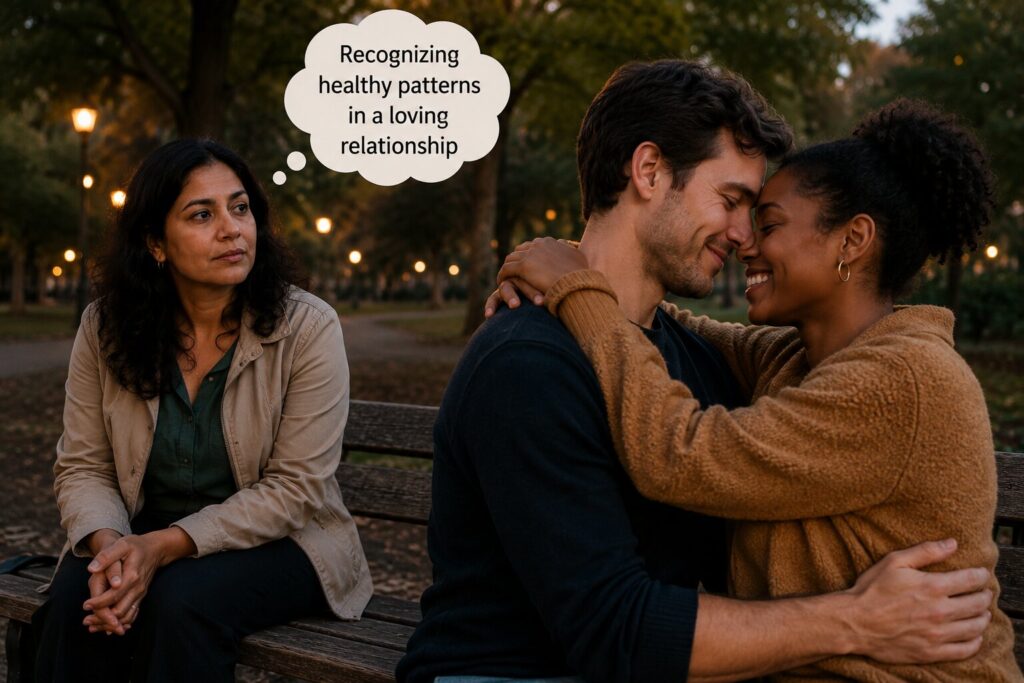
Can He Truly Love You and Still Remain Married?
This may be the hardest question in the entire article.
Not because the answer is impossible.
Because the answer is rarely simple enough to bring immediate relief.
A man can have real feelings for you and still remain married.
That possibility is difficult to accept because it seems to challenge everything many people believe about love.
We are taught that if love is strong enough, action follows.
If someone truly wants you, they choose you.
If someone is unhappy, they leave.
If someone says you are the love of their life, then surely their life should eventually begin reflecting that claim.
Sometimes it does.
Sometimes it does not.
Human beings do not make life changing decisions through emotion alone.
Love may create desire.
It may create longing.
It may make another future feel possible.
But love must still pass through fear, responsibility, habit, identity, guilt, family pressure, financial reality, and the consequences of change.
That is where many relationships become painful.
The feelings may be real.
The future may still remain uncertain.
You may sense his love in private moments.
You may see it in the way he softens around you.
Perhaps he shares parts of himself that he hides from everyone else.
Maybe he tells you that he feels more understood, more alive, or more emotionally safe with you than he has felt in years.
Those moments can be genuine.
At the same time, he may continue returning to the same home, the same routines, and the same marriage.
That contradiction can feel impossible to live with.
Part of you says:
“He would not speak to me this way if he felt nothing.”
Another part says:
“If the love were truly enough, would something not have changed by now?”
Both questions deserve honesty.
Staying married does not automatically prove that he does not love you.
But his love for you does not automatically prove that he will leave.
That is the balance this stage must hold.
Anything more simplistic would either dismiss your experience or give you reassurance that reality may not support.
Feelings Do Not Automatically Create Readiness
Readiness is not the same as love.
Someone may know what they feel long before they know what they are prepared to do about it.
That gap can last much longer than anyone expects.
He may understand that the marriage no longer feels fulfilling.
He may believe the connection with you is real.
He may imagine another life.
Yet when the time comes to make a decision, he may discover that wanting change and being ready for change are completely different experiences.
Wanting change happens inside the mind.
Readiness asks a person to enter reality.
It asks them to face consequences.
To disappoint people.
To accept uncertainty.
To admit that the decision may change family relationships forever.
To lose parts of a life they once worked hard to build.
That is why someone may speak with confidence during emotional moments and then hesitate when action becomes necessary.
In private, the future feels close.
In reality, it requires decisions that cannot be taken back easily.
This does not automatically mean his words were dishonest.
Human beings often speak from the emotion they feel in the moment.
When he is with you, he may genuinely believe that he can make the change.
He feels the relief of being understood.
He remembers how unhappy he feels elsewhere.
The future appears obvious.
Then he returns to the structure of his current life.
Children need him.
Bills arrive.
Family routines continue.
His spouse behaves in ways that remind him of shared history.
Fear returns.
The decision becomes less emotional and more practical.
That shift can make his behavior seem inconsistent.
One moment, he sounds certain.
The next, he becomes cautious.
You may interpret that change as proof that his love disappeared.
Often, the love did not disappear.
His fear simply became louder.
The problem is that fear can remain louder for years.
At some point, readiness cannot remain an abstract possibility forever.
A person may genuinely need time.
But time alone does not create courage.
Readiness usually grows when someone begins confronting the decision honestly.
When they stop only talking about how difficult the situation is and start examining what would actually need to happen.
When they take responsibility for the uncertainty they are creating.
When they move from emotional desire to practical truth.
If none of that happens, the relationship may remain trapped between sincere feelings and permanent hesitation.
That is one of the most painful places to wait.
Why Fear, Children, Responsibility, and Identity Still Matter
When someone says he stays because of the children, people often respond in one of two ways.
Some accept the explanation immediately.
Others dismiss it as an excuse.
Reality is usually more complicated.
Children can create emotional responsibility that goes far beyond legal custody or financial support.
A father may fear missing ordinary moments.
School mornings.
Weekend routines.
Bedtime conversations.
The small details of daily life that cannot be recreated through scheduled visits.
He may imagine his children blaming him.
He may fear becoming a stranger inside their lives.
Even if those fears are not guaranteed to become true, they may feel real enough to keep him from moving.
Responsibility also changes how a person sees himself.
He may believe that being a good man means holding the family together.
Providing stability.
Protecting others from pain.
Enduring personal unhappiness for the sake of people who depend on him.
That belief may be deeply tied to culture, religion, family expectations, or the promises he once made.
Leaving may feel like more than ending a marriage.
It may feel like becoming someone he never wanted to be.
This is where identity becomes important.
Long marriages often create a version of the self that is difficult to separate from the relationship.
He may be known as a husband.
A father.
A provider.
A family man.
His home, friendships, finances, routines, and social world may all be connected to that identity.
Even if the marriage feels emotionally empty, it may still provide structure.
He knows who he is inside it.
Leaving may force him to answer questions he has avoided for years.
Who am I outside this marriage?
What happens if the new relationship does not survive ordinary life?
Will I still recognize myself after everything changes?
People often underestimate how frightening identity loss can be.
Someone may prefer an unhappy but familiar life over a future that requires rebuilding everything.
That does not make the decision fair to you.
It does make the fear more understandable.
Financial responsibility can add another layer.
A shared home.
Debt.
Property.
School fees.
Retirement plans.
Business interests.
Extended family support.
Leaving may not simply mean choosing another relationship.
It may mean changing the financial security of several people.
Again, these responsibilities do not automatically justify endless delay.
But dismissing them as excuses may prevent you from seeing the full picture.
If you want to understand whether his hesitation reflects genuine conflict or repeated avoidance, it helps to look at whether he is trying to resolve these responsibilities or only naming them whenever the conversation becomes difficult.
That difference matters.
A real obstacle creates work.
An excuse creates repetition.
Someone facing genuine responsibility may move slowly, but they usually begin asking practical questions.
How can the children be supported?
What would separation look like?
What would change financially?
What conversations need to happen?
Someone avoiding a decision may repeat the same reason for years without moving closer to understanding it.
That is where patience begins needing evidence.
“A real obstacle creates work. An excuse creates repetition.”
To understand how fear, family responsibility, identity, and familiarity can keep someone in a marriage long after happiness has faded, read Why Married Men Stay in Unhappy Marriages.
Love Can Be Real Even When Action Is Missing
This is one of the most uncomfortable truths to hold.
A person may genuinely love you and still fail to act.
People sometimes reject this possibility because it feels unfair.
They believe that if action is missing, the love must have been false.
That conclusion can bring a certain kind of clarity.
But it may not always reflect the truth.
Some people feel deeply and act poorly.
They love but avoid.
They care but delay.
They understand what the relationship needs but remain afraid of the consequences.
Their feelings may be sincere.
Their behavior may still be harmful.
Those two realities can exist together.
Recognizing that does not mean you must accept the situation forever.
It simply allows you to understand it without forcing yourself into one of two extremes.
Either he loves you and will definitely leave.
Or he stays, therefore he never loved you.
Life may not offer such a clean answer.
A man can love you and still be emotionally unprepared.
He can care deeply and still choose stability.
He can feel torn and still avoid making a decision.
He can fear losing you while also fearing the life he would lose by choosing you.
The love may be real.
The inaction is also real.
You have to live with both.
That is where the relationship becomes psychologically difficult.
You may spend years defending the feelings because you have seen them personally.
You know the tenderness was real.
You heard the vulnerability.
You experienced the connection.
Yet your life is not shaped only by what he feels.
It is shaped by what he does.
You cannot build a future on sincerity alone.
Sincerity matters.
But a relationship also needs truth, stability, responsibility, and direction.
A person can mean every word and still be unable to create the life those words encourage you to imagine.
That does not make the love meaningless.
It may mean the love is limited by the person’s readiness, courage, and capacity.
Those limits matter because they become your reality.
The question is no longer only:
“Does he love me?”
It becomes:
“What is his love capable of becoming?”
That is a much harder question.
It is also a more useful one.
Real Feelings Do Not Guarantee the Future You Want
One of the greatest emotional mistakes people make is assuming that real feelings must eventually produce the desired outcome.
Sometimes they do.
But feelings are not promises from life.
A connection can be real and still not become permanent.
Two people can love each other and still want different things.
They can share emotional intimacy and still be unable to create a healthy relationship.
They can feel deeply connected and remain divided by timing, responsibility, fear, or incompatible choices.
This can be difficult to accept because it seems to reduce the value of love.
It does not.
Love can be meaningful without becoming a shared life.
A relationship can change you.
Teach you.
Awaken parts of you.
Become one of the most emotionally important experiences you have ever had.
And still not become the future you imagined.
The pain comes from believing that because the love is genuine, the ending is guaranteed.
That belief can keep people waiting much longer than reality supports.
He may truly want a future with you.
Wanting it does not mean he will create it.
He may genuinely believe that one day he will be ready.
Believing in future readiness does not make readiness present.
He may feel certain during your private conversations.
That certainty may disappear when he faces the consequences of acting.
None of this proves that he is lying.
It proves that feelings do not control every decision.
You may be waiting not for love to appear, but for courage, clarity, or readiness to catch up with love.
The difficult truth is that they may never catch up.
That possibility does not mean you should give up today.
It does mean your life should not be built entirely around what may happen eventually.
You need enough honesty to understand the difference between a future that is slowly being created and a future that exists mainly inside repeated conversations.
The first may require patience.
The second may require a more difficult kind of clarity.
Real feelings deserve respect.
So does reality.
Neither should be used to erase the other.
The Difference Between Understanding His Situation and Excusing Endless Delay
Understanding is compassionate.
Excusing every delay can become self abandonment.
The two often look similar at first.
You know he has children.
You understand the financial pressure.
You recognize the emotional difficulty.
You do not want to make an already painful situation harder.
That compassion may be one of the reasons he trusts you.
You may be the only person who does not judge him.
The only person who allows him to speak honestly about his fears.
That role can feel deeply meaningful.
The danger begins when understanding has no limits.
When every delay receives a new explanation.
Every broken promise becomes evidence of how difficult his life is.
Every period of distance becomes something you must accept quietly.
You may become so committed to understanding him that you stop noticing how little space remains for your own experience.
Understanding should help you see the truth more clearly.
It should not require you to deny the truth you are living.
You can understand why he is afraid and still acknowledge that the fear is hurting you.
You can respect his responsibilities and still ask whether your future matters.
You can believe his feelings are sincere and still recognize that the relationship has remained unchanged.
Compassion and boundaries can exist together.
They should.
Excusing endless delay often begins with the idea that asking for clarity is cruel.
You tell yourself that he is under pressure.
That now is not the right time.
That one more conversation may push him away.
So you wait.
Then another obstacle appears.
Another year passes.
At some point, the question changes.
You are no longer asking whether his reasons are valid.
You are asking whether the relationship has any realistic direction.
That is not impatience.
It is emotional honesty.
A genuine obstacle may slow progress.
It should not make progress impossible forever.
A person who loves you may need time.
But if every request for clarity is met with another vague promise, the issue may no longer be timing.
It may be avoidance.
The most useful thing you can watch is whether his explanations become more specific over time.
Does he understand his own fear better?
Does he make practical decisions?
Does he communicate more honestly about what he can and cannot offer?
Or does every conversation return to the same emotional reassurance?
Understanding his situation should create greater clarity.
If it only creates more reasons for you to wait, something important may be missing.
“If it only creates more reasons for you to wait, something important may be missing.”
If you are struggling to tell the difference between genuine emotional conflict and repeated avoidance, How to Tell If He’s Confused or Simply Keeping You Waiting explores the patterns that often become clearer over time.
What His Staying Does and Does Not Tell You
His decision to remain married tells you something.
But not always what you think.
It does not automatically tell you that he loves his wife more.
It does not automatically tell you that his feelings for you are false.
It does not prove that the marriage is happy.
Nor does it prove that he will leave eventually.
What it does tell you is that, for now, the forces keeping him there are stronger than the forces moving him out.
Those forces may include love.
Fear.
Children.
Identity.
Financial security.
Guilt.
Habit.
Responsibility.
Uncertainty.
A lack of readiness.
Or several of these at once.
This is why comparing yourself to his wife may never give you the answer you want.
You are not competing only with another woman.
You may be competing with an entire life.
A home.
A family structure.
Years of history.
A role he understands.
A future he can predict.
That does not make you less valuable.
It means the choice is larger than emotional preference alone.
Still, his staying affects you.
You cannot pretend otherwise.
Even if the reasons are understandable, the result may still be that your life remains uncertain.
That is why compassion must include yourself too.
You do not have to reduce him to a villain in order to admit that the relationship hurts.
You do not have to deny his feelings in order to recognize that his choices are not giving you enough security.
You can hold both truths.
He may love you.
And this may still not be enough for the future you need.
That sentence can feel devastating.
It can also be freeing.
Because once love is no longer treated as the only question, you can begin looking at the relationship more honestly.
What is the love creating?
Where is it moving?
What is it asking you to sacrifice?
What is it giving back?
Those questions do not deny the connection.
They help you understand its real place in your life.
A Reflection Before We Move Forward
Take a moment and consider the relationship as it exists now.
Not only what he feels.
Not only what he says he wants.
What is actually happening?
Do his responsibilities create understandable delays, or have they become permanent explanations?
Is his fear something he is actively trying to understand, or something he repeatedly uses to avoid action?
Does he give you honest information, even when the truth may disappoint you?
Are the conversations becoming clearer?
Is there visible movement?
Or does the relationship return to the same emotional place after every difficult discussion?
Most importantly, can you respect his situation without disappearing inside it?
You do not have to answer these questions immediately.
They are not designed to push you toward leaving or staying.
They are meant to help you hold the situation in full.
His feelings.
His fear.
His responsibilities.
Your love.
Your time.
Your emotional wellbeing.
All of these belong in the same conversation.
Because a balanced understanding does not ask only whether he loves you.
It also asks whether the relationship has enough truth, readiness, and movement to support the future you are hoping for.

When Love Is Real but the Relationship Still Hurts
One of the hardest truths to accept is that love can be real and the relationship can still be painful.
People often assume those two things cannot exist together.
If the love is genuine, they believe the relationship should feel safe.
If the relationship hurts, they assume the love must have been false.
Real life is rarely that simple.
A man may care for you deeply and still leave you living inside uncertainty.
He may feel emotionally connected to you and still remain unable to offer consistency.
He may miss you, need you, think about you, and fear losing you.
Yet the relationship may still ask more from your heart than it gives back.
That contradiction is what makes complicated love so difficult to understand.
If he felt nothing, leaving would eventually become clearer.
If everything were secure, trusting the relationship would feel easier.
Instead, you may find yourself living between two truths.
The love feels real.
The pain is real too.
You may have tried to solve that contradiction by focusing only on his feelings.
You remind yourself of the moments when he was vulnerable.
The way he looked at you.
The words he used.
The promises that sounded too sincere to be empty.
Those memories help you hold on.
Then another delay comes.
Another period of silence.
Another conversation ends without enough clarity.
The pain returns, and you begin wondering whether loving someone should feel this exhausting.
That question does not mean the relationship is meaningless.
It means your emotional reality deserves the same attention as his.
Until now, much of this article has focused on understanding him.
His fear.
His marriage.
His children.
His responsibilities.
His attachment.
His lack of readiness.
All of that matters.
Now another truth must enter the conversation.
You matter too.
Your time matters.
Your emotional wellbeing matters.
Your future matters.
The relationship cannot be understood honestly if only one person’s difficulties are treated as important.
Love Does Not Automatically Make a Relationship Healthy
Love can exist inside unhealthy patterns.
That idea is uncomfortable because people often treat love as proof that a relationship is worth preserving at any cost.
But love alone does not create emotional safety.
It does not guarantee honesty.
It does not prevent repeated disappointment.
It does not automatically produce maturity, consistency, or accountability.
Two people may love each other and still communicate in ways that create fear.
They may feel deeply connected and still avoid the conversations that would bring clarity.
They may want one another and still remain trapped in a cycle that leaves both emotionally exhausted.
The presence of love does not erase the effect of the pattern.
Think about how the relationship feels between its most beautiful moments.
Not only when you are together.
Not only when he is affectionate.
Not only when he says exactly what you have been hoping to hear.
What happens in the spaces between those moments?
Do you feel emotionally secure?
Do you know where you stand?
Can you raise a concern without fearing that he will disappear?
Does the relationship allow room for your needs?
Or do you spend most of your time recovering from uncertainty until the next loving moment makes everything feel possible again?
That cycle can become emotionally addictive.
Pain creates distance.
Distance creates fear.
Fear creates a reunion.
The reunion feels intense because the relationship almost seemed lost.
For a while, love feels stronger than ever.
Then the original problems return.
The intensity of reunion can make people mistake emotional relief for relationship health.
You may think:
“We always find our way back to each other. That must mean the love is powerful.”
Perhaps it is powerful.
But a relationship should not need repeated emotional emergencies to prove that it matters.
Healthy love does not mean there are no difficult seasons.
It means difficulty is not the only thing creating closeness.
A healthier relationship allows love to exist during ordinary life.
It does not depend on fear, secrecy, jealousy, or the possibility of loss to remain emotionally alive.
It creates enough stability that affection no longer feels like rescue.
You do not need to be on the edge of walking away before your feelings are taken seriously.
You do not need to become emotionally unavailable before he suddenly becomes present.
You do not have to keep losing peace in order to experience closeness.
Love becomes healthier when it stops surviving only through intensity and begins creating security.
Your Needs Do Not Become Less Important Because His Life Is Complicated
One of the easiest ways to lose yourself in a complicated relationship is to believe that his situation automatically matters more than yours.
He has a marriage.
Children.
Financial responsibilities.
Family expectations.
A public life that may change completely if he makes a different choice.
Those realities are significant.
They deserve understanding.
But your needs do not become unimportant simply because his life contains more visible complications.
You may have learned to minimize what you feel.
When you are lonely, you remind yourself that he is under pressure.
When plans change, you tell yourself that he has responsibilities.
When communication becomes inconsistent, you explain that he is trying to manage two worlds.
Each explanation may contain truth.
The danger appears when understanding him requires you to keep dismissing yourself.
You may stop asking for what you need because his answer is always complicated.
More time.
More patience.
More understanding.
A quieter conversation.
A better moment.
Eventually, your needs may begin feeling unreasonable even to you.
You might feel guilty for wanting consistent communication.
Ashamed for needing reassurance.
Selfish for asking where the relationship is going.
You may fear that expecting more makes you insensitive to his situation.
But emotional needs do not become wrong simply because they are difficult for someone else to meet.
Wanting honesty is not pressure.
Wanting consistency is not selfishness.
Wanting to understand whether the relationship has a future is not cruelty.
Those are ordinary needs in any relationship where someone is asking for your emotional investment.
Your compassion should not require your silence.
You can care about his children and still acknowledge that waiting affects your own life.
You can respect his responsibilities while asking whether he is making realistic decisions.
You can understand his fear without pretending that the uncertainty does not hurt you.
A relationship becomes emotionally unbalanced when one person’s difficulties are endlessly explained and the other person’s pain is repeatedly postponed.
Love should not require you to accept that imbalance forever.
His life may be complicated.
Your heart is still involved.
Both realities deserve room.
You Can Understand Him Without Abandoning Yourself
Understanding someone can be an act of love.
It allows you to see beyond the surface.
To recognize fear beneath hesitation.
Responsibility beneath delay.
Grief beneath resistance.
That kind of understanding may be one of the reasons he feels safe with you.
You may be the person who does not judge him quickly.
The one who can see that his choices are shaped by more than simple preference.
That compassion is valuable.
But there is a point where understanding can turn into self abandonment.
It happens when you repeatedly ignore what the relationship is doing to you because you can explain why he behaves the way he does.
You understand why he cannot call.
Why he cannot leave.
Why he cannot make promises he can keep.
Why he cannot give you more.
After a while, every pain has an explanation.
But explanations do not always create change.
Sometimes they simply make the pain easier to tolerate.
You may become so skilled at seeing the relationship through his eyes that you stop looking through your own.
What has waiting done to you?
How has uncertainty changed your confidence?
What parts of your life have been postponed?
What have you stopped asking for because you are afraid of becoming another problem he must solve?
Those questions matter.
Understanding him should help you see the relationship more clearly.
It should not require you to disappear from the picture.
There is a difference between patience and self erasure.
Patience allows space for growth.
Self erasure asks you to accept anything because the other person’s life is difficult.
You can be compassionate and still have limits.
You can love someone and still say:
“This is hurting me.”
You can understand his reasons and still decide that the relationship needs greater honesty.
You can recognize his fear without making your entire future responsible for waiting until that fear disappears.
None of that means you have stopped loving him.
It means you have started including yourself in the love you are trying to protect.
The Question May Be Bigger Than Whether He Loves You
For a long time, you may have believed that everything depended on one answer.
Does he love me?
If the answer is yes, perhaps the waiting feels worthwhile.
If the answer is no, perhaps you believe you should leave.
But love is only one part of the decision.
Someone can love you and still be unable to create a healthy relationship.
They can care deeply and remain emotionally unavailable.
They can want you while refusing to make room for you.
They can fear losing you but still expect you to live inside uncertainty.
That is why the deeper question may be:
“Is this love capable of becoming the kind of relationship I need?”
That question moves beyond emotion.
It includes readiness.
Honesty.
Responsibility.
Consistency.
Visibility.
Commitment.
You may discover that his feelings are real, but his capacity is limited.
Perhaps he loves you in the only way he currently knows how.
That may include affection, secrecy, longing, emotional dependence, and repeated promises.
But the way someone knows how to love is not always the way you need to be loved.
That distinction can feel heartbreaking.
It can also bring clarity.
You do not have to prove that his love is false in order to admit that it may not be enough.
You do not have to turn him into a dishonest person to recognize that he is not giving you a stable future.
The relationship does not need a villain for the pain to be real.
Sometimes two people can love each other and still remain trapped in a pattern that does not allow either of them to live honestly.
The question then becomes less about proving the love.
More about understanding its limits.
What can he actually offer?
What is he willing to face?
What does he keep avoiding?
How long has the relationship depended on hope rather than movement?
Those questions reveal what love alone cannot.
What Is This Love Actually Creating in Your Life?
This may be the most important question in the entire article.
Not:
“How strongly does he feel?”
Not:
“How often does he say he loves me?”
Not even:
“Would he be devastated if I left?”
Ask instead:
“What is this love creating in my life?”
Is it creating greater confidence?
Peace?
Honesty?
Emotional security?
A clearer sense of direction?
Or is it creating anxiety, secrecy, self doubt, and endless waiting?
Love should not be judged only by its most emotional moments.
It should also be judged by its long term effect.
You may feel deeply loved when you are together and emotionally forgotten when you are apart.
You may experience extraordinary closeness while also living with constant uncertainty.
The beautiful moments are real.
So is the pattern surrounding them.
Look at what the relationship has asked you to become.
Have you become more secure?
Or more careful?
More honest?
Or more afraid to ask questions?
More connected to yourself?
Or more dependent on his reassurance?
Have you grown emotionally?
Or have you spent years trying to remain patient enough to earn a future that keeps moving away?
These questions are not designed to make you reject the relationship.
They help you understand its emotional cost.
Every meaningful relationship asks for sacrifice.
But sacrifice should contribute to something.
Trust.
Growth.
A shared direction.
Greater honesty.
When sacrifice becomes permanent and the relationship remains unchanged, the cost begins needing serious attention.
Perhaps this love has awakened something beautiful in you.
Maybe it reminded you that you could feel desired, understood, or emotionally alive.
That matters.
But the relationship may also have taught you to accept uncertainty as normal.
To wait without enough information.
To measure your worth through another person’s choices.
That matters too.
A mature understanding of love makes room for both.
The connection may have given you something valuable.
It may also be taking more than you can continue giving.
When Hope Starts Asking Too Much of You
Hope can keep people alive through difficult seasons.
It tells you that circumstances can change.
That fear can become courage.
That someone may eventually become ready.
Hope is not foolish.
But hope becomes dangerous when it asks you to ignore reality.
You may have spent months believing that the next conversation would bring clarity.
Then the next year.
Then another.
Each delay comes with a reason.
Some reasons are genuine.
The problem is not that obstacles exist.
The problem is when hope becomes the only evidence that the future is still coming.
You continue waiting because stopping would feel like admitting that all the patience meant nothing.
That thought can be unbearable.
The longer you have invested, the harder it becomes to step back.
You may think:
“I cannot leave now. We have already been through too much.”
But time already spent does not guarantee the future.
It only shows how much the relationship has mattered to you.
Hope becomes healthier when it is connected to movement.
Not perfect progress.
Not immediate results.
Movement.
Greater honesty.
More specific conversations.
Different choices.
A clearer understanding of what is possible.
If hope keeps asking you to wait while nothing changes, it may no longer be protecting the relationship.
It may be protecting you from the pain of facing what the relationship currently is.
That realization can be frightening.
It can also be the beginning of freedom.
Not necessarily freedom from the person.
Freedom from living only inside possibilities.
You Are Allowed to Need More Than Love
This may be something you have rarely allowed yourself to admit.
Love may not be enough for you.
Not because love is unimportant.
Because a life requires more.
You may need honesty.
Consistency.
Visibility.
Emotional safety.
A future you can understand.
A relationship that does not depend on secrecy forever.
A partner who does not only feel deeply but also chooses responsibly.
Those needs do not make you ungrateful.
They do not mean you failed to appreciate what the two of you share.
They mean you understand that love is meant to support life, not keep life permanently waiting.
Sometimes people remain in painful relationships because they believe asking for more is the same as rejecting the love they already receive.
It is not.
You can treasure the connection and still acknowledge what is missing.
You can believe his feelings are sincere while admitting that the relationship does not meet your emotional needs.
You can love him and still need clarity.
Those truths can coexist.
The strongest relationships are not built only on how much two people feel.
They are built on whether those feelings can support honesty, responsibility, and a shared future.
“The strongest relationships are not built only on how much two people feel. They are built on whether those feelings can support honesty, responsibility, and a shared future.”
If your deeper question is no longer only whether he loves you, but whether that love can become a clear and committed future, How to Make Him Choose Me Over Her explores the emotional patterns, obstacles, and choices that may be keeping the relationship stuck.
A Gentle Reflection Before We Continue
Pause and think about the relationship as a whole.
Not only the moments when you feel most loved.
Not only the moments when you feel most hurt.
What has the relationship created over time?
Do you feel increasingly secure?
Do you trust yourself more?
Are the conversations becoming clearer?
Is he taking greater responsibility for the future he speaks about?
Or are you still carrying the same questions you had a year ago?
Have you been able to remain fully yourself?
Or have you slowly become quieter, more patient, and less willing to express what you need?
Is hope supported by movement?
Or is hope doing all the work?
You do not have to answer these questions quickly.
They are not meant to push you toward a particular decision.
They help you see the relationship in full.
The love.
The limitations.
The beauty.
The pain.
The future being promised.
The life being lived today.
Because you deserve to understand all of it.
Not only whether his love is real.
But whether the relationship is becoming real enough to build your future around.
When Generic Relationship Advice Cannot Understand Your Story
By this point, you may have recognized yourself in many parts of this article.
Perhaps you saw your own experience in the difference between love and attachment.
Maybe you recognized the pattern of powerful words followed by uncertainty.
You may have felt understood while reading about secrecy, waiting, emotional dependence, responsibility, or the fear that his love may be real but still unable to become the future you want.
Even so, there may still be a part of you thinking:
“My situation is more complicated than this.”
That feeling is understandable.
No matter how detailed an article becomes, it is still written for many people at once.
Your relationship belongs to you alone.
An article can explain common patterns.
It can help you name feelings that have been difficult to understand.
It can show you the difference between attraction, attachment, comfort, dependence, love, and commitment.
What it cannot do is know exactly how those things are interacting in your relationship.
It cannot hear the tone of his voice when he speaks about the future.
It cannot know whether his promises have slowly become more realistic or simply changed wording over time.
It cannot see what happened before the relationship began.
It cannot know what responsibilities are genuinely keeping him where he is and which explanations may have become comfortable ways of avoiding a decision.
It cannot know what you have already tried.
How many conversations you have had.
How long you have been waiting.
What changed six months ago.
What was promised last year.
What keeps repeating.
Those details can completely change the meaning of the situation.
That is why general relationship advice often brings temporary relief but not lasting clarity.
It gives you possibilities.
Your story determines which possibilities actually fit.
Why Two Similar Relationships May Need Different Guidance
Imagine two women asking the same question:
“How do I know if he truly loves me?”
From the outside, their situations may sound almost identical.
Both are involved with married men.
Both have heard promises about the future.
Both feel deeply connected.
Both are tired of uncertainty.
It would be easy to assume that they need the same answer.
But once the full stories are heard, the differences may be enormous.
In one relationship, the man may be openly acknowledging the difficult reality of his marriage.
He may have begun practical conversations about separation.
His behavior may still be slow, but there may be visible movement.
Greater honesty.
Clearer decisions.
Fewer vague promises.
In another relationship, the man may have repeated the same explanation for years.
He may become emotionally intense whenever the woman starts pulling away, then return to the same pattern once the relationship feels secure again.
Both men may say:
“I love you.”
Both may sound sincere.
Both may be afraid of losing the relationship.
Yet the guidance needed in each situation would be very different.
One relationship may require patience while a difficult process unfolds.
The other may require the reader to look more honestly at a cycle that has become emotionally permanent.
Now imagine two wives asking whether their husbands still love them.
One may be dealing with a temporary season of emotional distance caused by stress, grief, or unresolved conflict.
Another may be living with years of avoidance, secrecy, and emotional withdrawal.
The same question.
Different reality.
This is why one size fits all advice becomes dangerous.
It treats people like categories.
The wife.
The mistress.
The married man.
The other woman.
But people are not categories.
They are individuals carrying specific histories, fears, loyalties, wounds, and choices.
A sentence that brings clarity to one person may create false hope for another.
Advice that encourages patience may help one relationship heal.
The same advice may keep another person waiting inside a pattern that has no real direction.
That is why meaningful guidance should never begin by assuming the answer.
It should begin by understanding the story.
What an Article Can Explain and What It Cannot Know
A strong article can help you understand psychology.
It can explain why secrecy intensifies emotion.
Why mixed signals make reassurance feel necessary.
Why emotional attachment can exist without commitment.
Why a man may genuinely love someone and still remain married.
Why love can be real while the relationship remains painful.
Those ideas matter because they give you language.
They help you recognize that your confusion is not foolish.
They show you that human beings can feel several conflicting emotions at once.
But an article cannot know the exact meaning of one person’s behavior without the full context.
For example, inconsistent communication may indicate emotional avoidance.
It may also reflect a short term crisis that has nothing to do with the relationship.
A postponed decision may reveal fear.
It may reveal responsibility.
It may also reveal that someone is more comfortable with the current arrangement than they are willing to admit.
The behavior alone does not always explain the reason.
The pattern matters.
The history matters.
The timing matters.
What happened before and after the behavior matters.
An article can tell you to compare words with actions.
It cannot know which actions have occurred unless you describe them.
It can explain that genuine love usually creates greater clarity over time.
It cannot know whether your relationship has become clearer during the last year or whether you have simply become more skilled at tolerating uncertainty.
It can explain that boundaries reveal emotional maturity.
It cannot know what happened when you set one.
Did he respect it?
Did he disappear?
Did he become more affectionate until you softened, then return to the same pattern?
Those details tell a deeper story than the general principle alone.
That is the limit of generic advice.
It can help you ask better questions.
It cannot answer every personal question without knowing the life behind it.
Recognizing that limit is not a weakness in the article.
It is honesty.
Anyone who claims to understand your entire relationship from one sentence is not understanding you.
They are fitting you into an answer they already prepared.
Your story deserves more care than that.
The Questions That Reveal the Real Relationship
People often begin with questions about feelings.
“Does he love me?”
“Does he think about me?”
“Will he choose me?”
Those questions are understandable.
But they may not reveal enough.
A deeper understanding often begins when the questions become more specific.
How did the relationship begin?
Was he already emotionally unhappy, or did the dissatisfaction become clearer after the connection with you developed?
What did he say at the beginning?
What has changed since then?
Which promises became actions?
Which promises were repeated without movement?
When does he become closest to you?
During calm periods?
Or mainly after conflict, loneliness, fear, or the possibility of losing you?
How does he respond when your needs become inconvenient?
Does he make space for them?
Or does he immediately remind you how complicated his life is?
What happens after you ask for clarity?
Does the conversation produce greater honesty?
Or only enough reassurance to help the relationship continue?
What are you actually hoping for?
A public relationship?
Marriage?
Emotional certainty?
A committed future?
Or simply proof that the connection was real?
Sometimes people ask whether someone loves them when the deeper need is confirmation that the years of waiting have not been wasted.
That is a different question.
It deserves a different conversation.
Another important question is:
What has this relationship changed in you?
Have you become more confident?
More secure?
More connected to your own needs?
Or have you become quieter, more anxious, and more dependent on reassurance?
The answer does not automatically tell you whether the love is real.
It tells you what the relationship is creating.
That distinction matters.
Questions like these do not exist to interrogate the relationship.
They help reveal the truth already living inside it.
Often, clarity does not come from discovering one hidden secret.
It comes from placing the full pattern together and finally seeing what it has been saying all along.
Why Personal Guidance Should Begin With Listening
Many people reach out expecting an immediate answer.
They want to know:
“Will he leave?”
“Does he truly love me?”
“Should I keep waiting?”
I understand why.
Uncertainty creates urgency.
When your emotions have been stretched for months or years, you want someone to remove the confusion as quickly as possible.
But responsible guidance should not begin with a conclusion.
It should begin with listening.
Before offering any perspective, I believe it is important to understand what has actually happened.
Not only what happened this week.
The full story.
How the relationship started.
What drew you to one another.
When the first promises were made.
What has changed.
What has remained exactly the same.
What you have already tried.
What hurts the most today.
What you are afraid may be true.
What you still hope can happen.
Those questions are not unnecessary delays.
They are the foundation of meaningful understanding.
Without them, guidance becomes guesswork.
A prepared answer may sound confident.
Confidence is not the same as accuracy.
The goal should never be to tell someone what they want to hear.
It should be to understand enough of the situation that the guidance fits the person living it.
Sometimes the most helpful conversation confirms that the relationship is showing real movement.
Sometimes it reveals that the reader has been surviving on promises for much longer than she realized.
At other times, the deeper issue may not be whether he loves her.
It may be whether she has begun losing herself while waiting for his love to become something more.
Each conclusion requires a different kind of care.
That is why listening must come first.
The Miko Kana Philosophy
One belief has guided my work for many years:
Every relationship deserves to be understood before it is judged.
That does not mean every relationship should continue.
It does not mean every promise should be believed.
It does not mean people should wait forever because circumstances are complicated.
It means the truth is easier to recognize when we stop forcing every story into the same explanation.
Some relationships need patience.
Some need more honest communication.
Some need stronger boundaries.
Some need healing.
Some require difficult acceptance.
Others may involve obstacles that are emotional, practical, personal, or spiritual.
The guidance should fit the situation.
The situation should never be forced to fit the guidance.
I also do not believe that spiritual guidance should replace honesty, communication, or personal responsibility.
Those things still matter.
No spiritual approach should become an excuse to avoid reality.
For me, meaningful guidance begins with the complete person.
Their emotions.
Their circumstances.
Their intentions.
Their history.
Their fears.
Their hopes.
Only then can different paths be considered thoughtfully.
Sometimes that path is practical.
Sometimes it involves emotional reflection.
Sometimes a person chooses to explore spiritual guidance as part of a broader process of understanding the relationship.
The important thing is that nothing should begin with pressure or exaggerated promises.
It should begin with truth.
Because when people are emotionally vulnerable, they do not need someone to make their decisions for them.
They need someone who can help them see their situation clearly enough to make decisions they understand.
Personal Relationship Assessment
A Personal Relationship Assessment is not a quick judgment based on one message.
It is not a promise that every relationship has the same solution.
It begins with understanding.
The purpose is to look at the relationship as a whole.
Not only at whether he says he loves you.
We look at how that love behaves.
What patterns keep repeating.
Where the relationship has moved.
Where it remains stuck.
What obstacles are real.
What explanations may have become permanent.
What you are hoping for.
What the relationship is currently capable of giving.
That distinction matters because two people may both say:
“He loves me, but he has not chosen me.”
One may be experiencing a relationship that is slowly moving through genuine obstacles.
The other may be trapped in an emotional cycle that survives through reassurance without meaningful direction.
The words are the same.
The pattern is different.
A personal assessment helps separate those possibilities.
It can also reveal whether the main issue is his love at all.
Sometimes the relationship contains real love, but the deeper obstacle is fear.
Sometimes it is responsibility.
Sometimes attachment.
Sometimes emotional dependence.
Sometimes avoidance.
Sometimes two people want different futures but have been afraid to say it clearly.
No article can know which of those possibilities fits your situation without hearing the details.
That is why the assessment begins with your story.
Not a formula.
Not assumptions.
Your story.
If This Feels Like Your Story
Perhaps, while reading this article, you have recognized more than one part of yourself.
You may have understood why the connection feels so powerful.
Why the secrecy made it feel rare.
Why his mixed signals kept you searching for reassurance.
Why his emotional dependence sometimes felt like devotion.
Why his love may be real while his readiness remains limited.
Maybe the article has given you language for feelings you have struggled to explain.
Even then, you may still be thinking:
“Yes, but my situation is different.”
It probably is.
Every relationship is different in the details that matter most.
Perhaps there are children involved.
A long separation.
Religious pressure.
Financial dependence.
A spouse who already knows.
A previous attempt to leave.
A sudden change in communication.
A promise that once seemed realistic but now feels uncertain.
Those details can completely change the meaning of the pattern.
If this feels like your story, the next helpful step may not be reading another twenty articles.
It may be allowing the full relationship to be understood in one place.
Not because an article has failed.
Because your life is more specific than general advice can ever be.
There is no pressure in that invitation.
No demand to make an immediate decision.
No assumption that personal guidance must lead to one particular outcome.
Sometimes the first benefit is simply hearing your own story clearly as you explain it.
When thoughts have been circling privately for a long time, speaking them in order can reveal what confusion kept hidden.
A repeated pattern becomes easier to see.
A fear becomes easier to name.
A hope becomes easier to examine honestly.
Understanding often begins there.
You Should Never Be Pressured While Searching for Clarity
Emotional uncertainty makes people vulnerable.
That vulnerability should be treated with respect.
You should never feel forced into a decision because someone claims to know your future immediately.
You should never be made afraid that something terrible will happen unless you act at once.
You should never be promised certainty that no responsible person could guarantee.
Clarity does not grow through pressure.
It grows through careful understanding.
A trustworthy conversation should leave room for your questions.
Your concerns.
Your beliefs.
Your boundaries.
Your right to decide what feels appropriate for you.
Even personal guidance has limits.
It cannot control another person’s choices.
It cannot replace the decisions that must eventually be made in real life.
What it can do is help you look at the relationship with greater understanding.
That may help you recognize patterns.
Consider different perspectives.
Understand emotional and spiritual concerns within the context of your own beliefs.
And decide what kind of path you
Frequently Asked Questions About How to Know If He Truly Loves You
By the time someone reaches this part of the article, they are usually no longer searching for a simple list of romantic signs.
They have already seen affection.
They have heard promises.
They have experienced closeness strong enough to make the relationship feel real.
What they still need is help understanding what those experiences mean when love, secrecy, marriage, responsibility, fear, attachment, and uncertainty are all mixed together.
The questions below are therefore not designed to give quick reassurance.
Each one explores a different part of the emotional reality behind the words:
“I love you.”
How can I tell whether he truly loves me or only desires me?
Desire is often immediate.
It draws someone toward you physically and emotionally. It can make conversations feel charged, meetings feel unforgettable, and time apart feel almost unbearable.
Real love may include desire, but it reaches beyond it.
A man who desires you may focus heavily on access to you, physical closeness, attention, excitement, or the emotional lift he receives when you are together.
A man who genuinely loves you begins caring about your life outside the moments that benefit him.
He wants to know what troubles you.
He remembers what matters to you.
Your feelings remain important even when intimacy is not available.
When you are disappointed, he does not treat your emotions as an obstacle standing between him and what he wants.
He tries to understand them.
Pay attention to how the relationship behaves when physical closeness is impossible or when you set a boundary.
Does his care remain steady?
Does he continue showing interest in your wellbeing?
Can you spend time together without every interaction being pushed toward romance, secrecy, or physical intimacy?
Desire often asks:
“How can I be close to you?”
Love also asks:
“How can I care for you responsibly?”
No single gesture will answer this question. Look at the overall pattern. Attraction may begin the relationship, but genuine love gradually makes room for respect, emotional responsibility, patience, and concern for your future.
Can a married man genuinely love another woman?
Yes, a married man can develop genuine feelings for another woman.
Marriage does not remove a person’s ability to form emotional connections. Someone may feel lonely, emotionally distant, misunderstood, or disconnected within their marriage and later develop a powerful bond with another person.
However, the existence of genuine feelings does not automatically determine what he will do.
A person can love someone and remain married because of children, financial obligations, loyalty, fear, identity, family expectations, habit, uncertainty, or continued emotional attachment to the life he already has.
This is where many women become trapped between two conclusions.
Either:
“If he stays married, he cannot love me.”
Or:
“Because he loves me, he will eventually leave.”
Neither conclusion is automatically true.
His feelings may be real while his readiness remains limited. He may love you and still choose the stability of his marriage. He may want another future without becoming capable of creating it.
That is why the deeper question is not only whether he loves you.
It is whether his love is becoming honest, responsible, and capable of supporting the kind of relationship you want.
Real feelings deserve to be acknowledged.
So do real choices.
Would he leave his wife if he truly loved me?
Not necessarily.
This is one of the most painful answers because many people want love to provide a clear prediction.
Sometimes a man leaves because the relationship with another woman helps him recognise that his marriage is already over.
Sometimes he stays despite strong feelings because the consequences of leaving feel greater than the unhappiness of remaining.
Love can influence a decision.
It cannot remove every fear, responsibility, or attachment surrounding that decision.
A man may love you while feeling terrified of losing daily contact with his children.
He may fear financial collapse, family judgment, regret, loneliness, or the possibility that your relationship will feel different once secrecy and limited time are replaced by ordinary life.
None of those fears proves that he does not love you.
At the same time, love should not become an explanation that requires you to wait forever.
Watch whether his situation is moving.
Is he confronting the reality of his marriage?
Are conversations becoming more honest?
Is he making practical decisions?
Or does he repeat the same promises whenever you begin questioning the future?
Love may explain why he does not want to lose you.
His actions reveal whether he is prepared to build a life with you.
If your deepest question is whether his feelings will ever lead to a real decision, Will He Leave His Wife for Me? The Honest Truth Every Woman Needs Before She Keeps Waiting explores the patterns that may help you separate hope from visible progress.
Can a man love you and still keep you waiting?
Yes, but the fact that love may exist does not make endless waiting harmless.
A man may feel genuine affection while remaining afraid, conflicted, or unprepared. He may keep asking for time because he honestly believes he will eventually become ready.
The problem is that intention does not stop time from passing.
While he is trying to decide, you are also living with the emotional consequences of his uncertainty.
You may postpone your own plans.
Turn away from other possibilities.
Continue investing in a future that remains undefined.
Over time, waiting can become the relationship rather than a temporary stage within it.
The important distinction is whether the waiting contains movement.
Are the conversations becoming more specific?
Are promises followed by practical steps?
Is he becoming more accountable for the effect of his choices?
Do you understand the situation more clearly than you did six months ago?
Waiting may be understandable when genuine progress is taking place.
Waiting becomes more dangerous when the same explanations repeat while the relationship remains unchanged.
Love can explain why someone wants you to stay.
It does not automatically justify asking you to remain indefinitely without clarity.
Why does he say he loves me but avoid commitment?
Saying “I love you” expresses a feeling.
Commitment asks someone to accept the consequences of that feeling.
Those are different levels of emotional responsibility.
He may love the connection you share.
He may feel safer with you than he feels anywhere else.
He may genuinely imagine a life together.
Yet commitment requires him to make choices that may create loss, conflict, disappointment, and uncertainty.
That is where avoidance often begins.
Talking about the future feels emotionally rewarding.
Building the future may require uncomfortable action.
He may avoid commitment because he fears making the wrong decision.
Perhaps he wants the emotional closeness of your relationship without losing the stability of his marriage.
He may also lack the maturity to be honest about what he can realistically offer.
Avoidance does not always mean his love is false.
It may mean his feelings are stronger than his courage or capacity.
Still, the effect on you remains real.
When love is repeatedly expressed without enough honesty or movement, you are left carrying hope without a secure foundation.
The question becomes:
Is he working through the fear?
Or is the fear being used to preserve a situation that benefits him while keeping you uncertain?
Patterns usually answer that more clearly than emotional words.
Is emotional attachment the same as love?
No.
Emotional attachment and love can exist together, but they are not identical.
Attachment develops when someone becomes important to your emotional stability.
You turn to them for comfort, reassurance, encouragement, or relief from loneliness. Their presence becomes familiar and psychologically significant.
A man may feel deeply attached to you because you are the person who understands him.
He may fear losing you because life feels harder without your support.
That attachment can include tenderness, longing, jealousy, and emotional dependence.
Love goes further.
Mature love recognises you as a separate person whose wellbeing matters, not only as someone who provides comfort.
It becomes concerned with how the relationship affects your confidence, time, dignity, and future.
Attachment may say:
“I need you in my life.”
Love with responsibility asks:
“What am I creating in your life?”
The attachment may be genuine and powerful.
The deeper issue is whether it is developing into honest commitment or simply helping him cope with circumstances he has no intention of changing.
For a deeper explanation of how emotional reliance develops and how it differs from commitment, read Signs He Is Emotionally Attached to Another Woman.
Can a man love two women at the same time?
Human emotions are capable of holding conflicting attachments.
A man may feel love, loyalty, affection, history, and responsibility toward his wife while also experiencing emotional intimacy, desire, and genuine love for another woman.
The two relationships may meet different needs.
One may contain shared history, family, identity, and stability.
The other may contain emotional understanding, renewed desire, freedom, or the feeling of being seen again.
This does not mean he loves both women in exactly the same way.
Nor does it mean he can maintain both relationships without causing pain.
Feelings may be complex.
Choices still carry consequences.
A person can feel torn for a long time because choosing one future may involve grieving another.
Yet living indefinitely between two relationships often shifts the emotional cost onto the women involved.
One waits for clarity.
Another may live inside a marriage without fully understanding where her husband’s heart has gone.
The fact that he feels love for two people does not remove his responsibility to become honest about the life he is creating.
Love may be divided.
Time, commitment, and practical choices eventually cannot be.
Does secrecy make a relationship feel stronger than it really is?
It can.
Secrecy creates a private emotional world where every moment feels protected, rare, and intense.
You may share parts of yourselves that no one else sees. Because the relationship exists outside ordinary life, the time together may be highly focused and emotionally meaningful.
That connection can be genuine.
Secrecy can also preserve an idealised version of the relationship.
You may not experience daily responsibilities together.
There are fewer conversations about bills, parenting, household routines, exhaustion, or ordinary frustration.
Much of the connection may take place during moments when both people actively seek closeness.
As a result, the relationship can feel more peaceful than his marriage because the two relationships are operating under completely different conditions.
Secrecy also creates emotional investment.
The sacrifices, risks, and waiting may make the relationship feel exceptionally important. After enduring so much, questioning the future can feel like denying everything you have experienced.
This does not mean hidden relationships are automatically false.
It means they are harder to evaluate.
The connection has not yet been tested by complete visibility, shared responsibility, ordinary routine, and public accountability.
A love that feels powerful in secrecy may become stronger when brought into reality.
It may also reveal limitations that secrecy once protected.
How do I know whether I am convenient to him?
Convenience does not always look careless.
Sometimes it looks affectionate.
He may contact you consistently when he is lonely, unhappy, or in conflict at home. He may express strong feelings because the relationship provides emotional relief.
The important question is whether the connection remains balanced when your needs become inconvenient.
Does he make room for you when his life is calm?
Can he support you when you are struggling?
Does he remain present when the conversation is about what the relationship is doing to your heart?
Or does closeness mainly happen when he needs reassurance, affection, escape, or emotional safety?
Pay attention to what happens when you set boundaries.
A man who values only convenience may become distant, defensive, or suddenly more romantic until the previous arrangement is restored.
A man who genuinely values you will try to understand why the boundary became necessary.
Convenience focuses on keeping access to the relationship.
Love with commitment focuses on creating conditions in which both people can feel respected.
You may be extremely important to him and still be serving a convenient emotional role.
Those realities can exist together.
The difference becomes clearer when you ask whether he is willing to accept discomfort, responsibility, or change in order to protect your wellbeing.
Can love be genuine if his actions remain inconsistent?
Yes, feelings can be genuine while behaviour remains inconsistent.
People are not always emotionally mature enough to act according to what they feel.
Fear, avoidance, guilt, competing responsibilities, and uncertainty may create contradictions.
However, genuine feeling does not make inconsistency emotionally harmless.
You live with his actions, not only with the truth inside his heart.
If he repeatedly withdraws, postpones decisions, disappears after closeness, or offers reassurance without change, the effect on you remains significant even if his feelings are sincere.
The key is whether he recognises the inconsistency and takes responsibility for it.
Does he return to difficult conversations?
Does he become clearer about what he can offer?
Do apologies lead to change?
Or does every cycle end with another emotional promise?
Love becomes more trustworthy when consistency gradually increases.
It does not need to become perfect.
It should begin becoming more understandable.
If years pass and his actions still tell a different story from his words, the question may no longer be whether he feels something.
It may be whether his capacity for love is strong enough to create a relationship you can safely depend on.
How long should I wait for his actions to match his words?
There is no universal number of weeks, months, or years.
A realistic timeline depends on what stands in the way, what progress has already happened, and what kind of future has been discussed.
Instead of looking only at elapsed time, look at movement.
Has he become more honest?
Have the obstacles become clearer?
Are practical decisions being made?
Does he accept responsibility for your uncertainty?
Can he explain what must happen next without hiding behind vague phrases such as “soon,” “one day,” or “when the time is right”?
A complicated situation may require patience.
Patience should not mean surrendering your life to an undefined future.
You are also allowed to decide that a situation has taken more from you than you can continue giving.
That decision does not require proving that he never loved you.
It may simply mean that the relationship is not creating enough stability, truth, or movement for the future you need.
The better question may be:
“What evidence tells me that waiting is leading somewhere?”
If hope is the only answer, the relationship may need more honest examination.
When you are unsure whether time reflects genuine emotional conflict or a repeating pattern of avoidance, How to Tell If He’s Confused or Simply Keeping You Waiting can help you examine the difference.
Why does he pull away after becoming emotionally close?
Emotional closeness creates vulnerability.
For someone living inside a divided or complicated life, that vulnerability may feel both comforting and frightening.
During moments of intimacy, he may speak honestly about love, unhappiness, fear, and the future.
Afterward, reality returns.
He remembers the consequences of what he admitted.
The responsibilities waiting at home.
The decisions he has not made.
The possibility that the relationship may demand more than he currently feels able to give.
Pulling away can become a way of regulating that emotional pressure.
Distance helps him feel more in control.
It allows him to return to familiar routines and temporarily avoid the conflict between what he feels and what he is doing.
This pattern does not always mean his closeness was false.
It may show that intimacy activates fear.
The concern is whether he understands the pattern and takes responsibility for it.
Does he communicate instead of disappearing?
Can he explain what happens emotionally after closeness?
Is he trying to become more consistent?
Or are you repeatedly left to interpret silence on your own?
A relationship cannot become secure if one person creates intimacy and the other person must repeatedly survive the withdrawal that follows.
Love may explain the closeness.
Emotional maturity determines how he handles what comes afterward.
Can spiritual guidance help me understand his feelings?
Spiritual guidance may help some people reflect on a relationship from another perspective, particularly when faith, tradition, intuition, or spiritual beliefs form an important part of their lives.
However, spiritual guidance should not replace honest observation.
It should not ask you to ignore inconsistent behaviour, silence your needs, or believe promises that have no visible support.
A responsible spiritual approach begins by understanding the full relationship.
What has happened?
What patterns repeat?
What practical obstacles exist?
What are you hoping for?
What does your belief system mean to you personally?
Spiritual reflection may help you explore emotional concerns, intentions, fears, or the sense that the relationship carries a deeper significance.
Even then, another person’s free choices, responsibilities, and real life decisions still matter.
No responsible guidance should offer absolute certainty about someone’s future actions.
Its value lies in helping you examine the situation more carefully and understand how spiritual concerns fit alongside emotional honesty and practical reality.
The approach should leave you feeling clearer, not frightened, pressured, or dependent.
What should I do if I love him but feel emotionally exhausted?
Emotional exhaustion does not mean your love has disappeared.
Often, it means you have been carrying uncertainty for too long.
You may still care deeply while feeling tired of waiting, interpreting, forgiving, and trying to remain hopeful.
That exhaustion deserves attention.
It may show up as difficulty sleeping, loss of concentration, irritability, emotional numbness, or constant anxiety whenever communication changes.
Perhaps you no longer enjoy the relationship because most of your energy is spent trying to understand it.
You do not have to make an immediate life changing decision.
Begin by acknowledging what the relationship has been doing to you.
What part feels heaviest?
The secrecy?
The waiting?
The inconsistent communication?
The fear that asking for more will make him leave?
Consider whether you have enough emotional space outside the relationship.
Are you maintaining friendships, routines, goals, and parts of life that remind you who you are?
Protecting your wellbeing is not a betrayal of love.
It is an acknowledgment that your heart also has limits.
You can love him and still need greater honesty.
You can care about his difficulties while recognising that the current pattern is no longer emotionally sustainable.
Exhaustion is not always telling you to leave.
It is telling you that something needs to change.
When should I seek personal guidance?
Personal guidance may be helpful when general advice continues leaving you with the same unanswered questions.
Perhaps you have read many articles, yet your situation contains details that seem to change everything.
There may be children, previous separations, cultural expectations, financial dependence, a spouse who already knows, long periods of silence, repeated promises, or a sudden change you cannot explain.
Guidance may also help when your thoughts have become circular.
You keep replaying the same conversations.
One day you feel certain.
The next day you doubt everything.
You are no longer sure whether you are seeing the relationship clearly or reacting to fear.
A meaningful personal conversation should not begin by telling you what to do.
It should begin by understanding:
How the relationship started.
What has changed.
Which promises became actions.
Which patterns keep returning.
What you have already tried.
What you fear
Tired Of Waiting For Him To Leave Her For You, Then Make Him Leave Her For You Now
Get your boyfriend to leave his wife for you. Make him leave her for you now regardless of what. Save him from his unhappy marriage or relationship.
Before You Leave
Before you close this page, I want you to pause for a moment.
Not to make a decision.
Not to convince yourself to stay.
Not to force yourself to walk away.
Simply pause long enough to listen to what this relationship has been teaching you.
You came here asking how to know if he truly loves you.
Perhaps part of you hoped for a clear sign.
A sentence.
A gesture.
A pattern that would remove every doubt.
Maybe you wanted reassurance that the feelings between you are real.
Or perhaps you wanted permission to trust what your heart has believed for a long time.
By now, you may understand that the question is more complicated than it first appeared.
His feelings may be sincere.
The connection may be meaningful.
He may miss you, depend on you, fear losing you, and imagine a future with you.
Yet none of those things, by themselves, can tell you whether the relationship is becoming honest, secure, and dependable enough to build your future around.
That is the deeper question.
Not only:
“Does he love me?”
But:
“What kind of life is this love creating for me?”
Does it give you greater confidence?
Does it bring more truth into your life?
Does it allow you to feel seen, respected, and emotionally safe?
Or has it slowly taught you to survive on promises, brief moments of closeness, and the hope that one day everything will become easier?
You may not know the answer immediately.
That is all right.
Clarity does not always arrive in one dramatic realization.
Sometimes it begins quietly.
You notice that the same conversation has happened too many times.
You recognize that reassurance no longer brings the peace it once did.
You begin understanding that love can be real while the relationship remains unable to give you what you need.
Or perhaps you see genuine movement that you had overlooked because fear had made every delay feel like rejection.
The purpose of reflection is not to force one conclusion.
It is to help you see the relationship as it truly exists.
Not only as you fear it may be.
Not only as you hope it will become.
As it is today.
A Final Reflection
There is a reason this question has stayed with you.
People do not repeatedly ask whether they are loved when they feel consistently secure.
The question usually returns when something important remains uncertain.
Perhaps his words are beautiful, but his decisions remain unclear.
Maybe his affection is genuine, but the future still feels hidden behind another promise.
You may feel emotionally close to him while remaining practically distant from the life you want.
That contradiction can make you question everything.
The connection.
His honesty.
Your judgment.
Your worth.
One of the cruelest effects of uncertainty is that it often turns another person’s indecision into a private criticism of yourself.
You begin wondering whether you were not patient enough.
Not understanding enough.
Not attractive enough.
Not easy enough to love.
But another person’s inability to make a decision does not define your value.
It reflects their fear, readiness, priorities, capacity, circumstances, and choices.
Those things can deeply affect your life.
They are not measurements of your worth.
You do not become more valuable when he moves closer.
You do not become less valuable when he pulls away.
You were never waiting to become worthy of love.
You were waiting to understand whether the love being offered could become something safe enough to trust.
That distinction matters.
It allows you to stop placing your identity inside someone else’s uncertainty.
You can care about his struggles without making them the final judgment on your life.
You can understand why he is afraid without allowing his fear to decide how long you remain in pain.
You can believe that the love is real while still asking whether the relationship is healthy enough, honest enough, and committed enough for the future you want.
Those questions do not betray love.
They give love context.
They help you distinguish between the beauty of what you feel and the reality of what you are living.
Sometimes the answer will bring hope.
Sometimes it will bring grief.
Both are forms of truth.
And truth, even when difficult, gives you something confusion never can.
A place from which to move forward.
The Miko Kana Philosophy
One belief has guided every relationship conversation I have had over the years:
People deserve to be understood before they are advised.
That principle may sound simple.
In practice, it changes everything.
It means I do not assume that every married man is lying.
I also do not assume that every promise will eventually become reality.
I do not believe that every woman should keep waiting.
Nor do I believe that every complicated relationship should be dismissed without understanding what has actually happened.
Relationships are not formulas.
Two people may use the same words and mean completely different things.
Two men may both say:
“I love you, but I need more time.”
One may be honestly working through fear, family responsibility, and a difficult transition.
The other may be protecting a comfortable arrangement that gives him emotional closeness without requiring a real decision.
The words sound the same.
The pattern tells a different story.
That is why I believe understanding must come before conclusions.
The history matters.
The timing matters.
What has changed matters.
What keeps repeating matters.
How he responds when your needs become inconvenient matters.
How the relationship affects your confidence, peace, and future matters.
Meaningful guidance should never erase those details.
It should begin with them.
I also believe that practical understanding and spiritual guidance should never be treated as enemies.
Some people find clarity through honest conversation, reflection, stronger boundaries, or a deeper understanding of relationship patterns.
Others also choose to explore spiritual guidance as part of their personal beliefs and journey.
Whatever path someone considers, it should never replace honesty, dignity, or personal responsibility.
It should help them see more clearly.
Not become another reason to avoid reality.
No guidance should frighten you into acting.
No one should pressure you by claiming that every delay has one hidden explanation.
No responsible person should promise certainty about another human being’s future choices.
Your emotions deserve more respect than that.
The goal is not to make decisions for you.
It is to help you understand enough of your own story that your decisions no longer come only from fear, longing, or confusion.
That is the heart of the Miko kana philosophy.
Listen first.
Understand deeply.
Then consider what path genuinely fits the person and the relationship.
A Personal Relationship Assessment
No article can know the full story of your relationship.
Even an article this detailed can only explain patterns.
It cannot know which pattern belongs to you without hearing what has actually happened.
It does not know how the relationship began.
Whether he was already emotionally separated from his wife or whether the dissatisfaction became stronger after meeting you.
It does not know what he promised at the beginning.
What has changed since then.
Whether his actions have slowly become more consistent.
Whether there was once visible progress that suddenly stopped.
Whether he attempted to leave before.
Whether children, finances, culture, religion, health, or family pressure have shaped his decisions.
It cannot know how he responds when you ask difficult questions.
Does he listen?
Does he explain?
Does he disappear?
Does he become affectionate until the immediate fear passes?
Does he return to the conversation later with greater honesty?
Those details reveal the relationship more clearly than one romantic gesture ever could.
A Personal Relationship Assessment begins there.
Not with a prepared conclusion.
Not with an assumption that every person needs the same answer.
It begins with the full story.
We look at the relationship from the beginning.
The emotional connection.
The promises.
The changes.
The delays.
The periods of closeness.
The moments when something began feeling different.
We consider what he says, but we also examine what the pattern has shown over time.
We look at what may be keeping him where he is.
Fear.
Responsibility.
Attachment.
Comfort.
Emotional dependence.
Avoidance.
A genuine but difficult transition.
Or a relationship that has survived through hope without enough movement.
The purpose is not to label him quickly.
It is to understand the relationship accurately.
Sometimes a personal assessment helps someone recognize that the situation contains more genuine progress than fear allowed them to see.
In another case, it may reveal that the same promises have been repeated for years without meaningful change.
Sometimes the deeper issue is not whether he loves her.
It is whether his love has enough honesty, readiness, and emotional responsibility to become the future she is hoping for.
Those are very different situations.
They should not receive identical guidance.
That is why the personal assessment matters.
It gives the relationship the care that generic advice cannot provide.
If This Feels Like Your Story
Perhaps you found yourself slowing down while reading certain parts of this article.
Maybe the description of mixed signals felt familiar.
Perhaps you recognized how secrecy made the relationship feel more powerful.
You may have understood, for the first time, that his dependence on you could be sincere without necessarily becoming commitment.
Maybe the section about waiting made you realize that the relationship has been asking for more patience than you ever imagined giving.
Or perhaps you felt relieved to hear that a man can love you and still remain married, because his staying has made you question whether every moment between you was false.
If this feels like your story, you do not have to reduce it to one sentence.
You do not have to decide today that everything was real.
You also do not have to decide that everything was a lie.
Human relationships often contain more truth and contradiction than either conclusion allows.
What matters is whether you can begin seeing the full picture.
His feelings.
His choices.
His fear.
His responsibilities.
Your needs.
Your time.
Your emotional wellbeing.
The future you want.
All of those deserve space.
Perhaps your relationship contains a detail that changes everything.
A separation that already happened.
A child who needs special care.
A cultural obligation.
A promise tied to a specific event.
A sudden emotional withdrawal.
A spouse who knows more than you first believed.
A repeated pattern that only becomes visible when the entire story is placed together.
That is why personal understanding can become so valuable.
Not because your situation is impossible to understand.
Because it is too specific to be reduced to a general article.
If this feels like your story, perhaps the next step is not another late night of searching for one more sign.
Perhaps it is allowing the whole relationship to be looked at carefully, calmly, and without judgment.
Sometimes the most important moment comes when you stop trying to answer everything alone.
You explain the story from the beginning.
You hear the pattern in your own words.
You recognize where hope has been supported by progress and where hope may have been doing all the work.
That kind of clarity does not take your choices away.
It gives them back to you.
You Don’t Have to Carry These Questions Alone
Relationship uncertainty can become incredibly isolating.
You may be surrounded by people and still feel that no one understands what you are carrying.
Friends may offer quick opinions.
Family may judge the situation without knowing its history.
You may stop talking about the relationship because you are tired of defending something you are not always sure how to explain.
So the questions remain inside you.
You replay conversations while driving.
You analyze messages before sleeping.
You remember every promise.
Every delay.
Every moment that made the love feel undeniable.
Then you remember everything that has not changed.
The mind continues circling because it is searching for certainty.
After a while, the emotional weight can affect more than the relationship.
It can change how you sleep.
How you concentrate.
How you see yourself.
How much hope you place in one message.
How deeply one period of silence affects your confidence.
You do not have to continue carrying all of that without support.
Being heard does not mean someone will make the decision for you.
It means your story no longer has to remain trapped inside the same private cycle.
A thoughtful conversation can help you separate facts from fears.
Promises from progress.
Love from dependence.
Hope from movement.
Understanding his situation from abandoning your own needs.
Sometimes that is where relief begins.
Not when every answer arrives.
When the questions finally become organized enough to understand.
Whatever the future of your relationship may be, you deserve to face it with as much clarity as possible.
You deserve honesty.
You deserve emotional dignity.
You deserve the chance to understand whether the life you are waiting for is slowly becoming real or whether your heart has been surviving mainly on possibility.
Most of all, you deserve to remember that your future belongs to you too.
It should not remain entirely dependent on when another person becomes ready.
One Question to Carry With You
Before you leave, ask yourself this quietly:
Even if his love is real, is this relationship giving me enough honesty, security, and movement to build my future around it?
Do not rush the answer.
Notice what happens inside you when you read the question.
Perhaps you feel immediate reassurance because there has been genuine progress.
Maybe you feel sadness because you already know how long the relationship has remained unchanged.
You may feel resistance because answering honestly seems frightening.
That response itself may be worth understanding.
The question does not ask whether the relationship was meaningful.
It does not ask whether he ever cared.
It does not erase the love.
It asks whether the love, as it currently exists, can support the life you need.
That is a different question.
It may lead you toward patience.
A clearer boundary.
A more honest conversation.
Personal reflection.
Practical guidance.
Spiritual guidance that fits your beliefs.
Or the recognition that your situation needs to be understood more personally before you decide what comes next.
Whatever answer begins forming, let it come from the complete picture.
Not only the most beautiful promise.
Not only the most painful day.
The pattern.
The direction.
The truth of what the relationship has become.
A Calm Invitation
If this article has helped you understand part of your relationship but you still feel that the details are too personal or complicated for general advice, you are welcome to share your story with me.
There is no need to arrive with everything perfectly organized.
You can begin with what feels most important.
How the relationship started.
What he has told you.
What has changed.
What keeps repeating.
What you are hoping for.
What you are afraid may be true.
I will begin by listening.
Only after understanding the situation can we explore what kind of guidance may fit your relationship, whether that involves practical reflection, a clearer understanding of the patterns, or spiritual guidance that respects your beliefs and personal circumstances.
No pressure.
No judgment.
No assumption that every relationship should end in the same way.
Only a conversation that begins where meaningful guidance should always begin.
With your story.